
Natural Approaches to High Blood Pressure (Part 2)
High blood pressure is commonly treated by lowering the number with medication. At the Naturopathic Physicians Group, the evaluation also looks for the reason the number went up. Inflamed blood vessels, kidney function, heavy metals, food sensitivities, hormones, cortisol, and thyroid function can all contribute to hypertension, and each one calls for a different approach.
We are Dr. Steven Katz and Dr. Loreena Ryder of Naturopathic Physicians Group in Scottsdale. In Part 1 of this series, we explained blood pressure numbers, common causes, diagnosis, and conventional treatment. This article covers the naturopathic approach: accurate home monitoring, testing for underlying causes, supportive foods, supplements, and in-office procedures.
Key Takeaways
Inflammation causes blood vessels to tighten, which forces your heart to pump with more pressure to reach vital organs.
An accurate home reading is a single reading per day, taken at a consistent time after sitting quietly for a few minutes, with each result recorded.
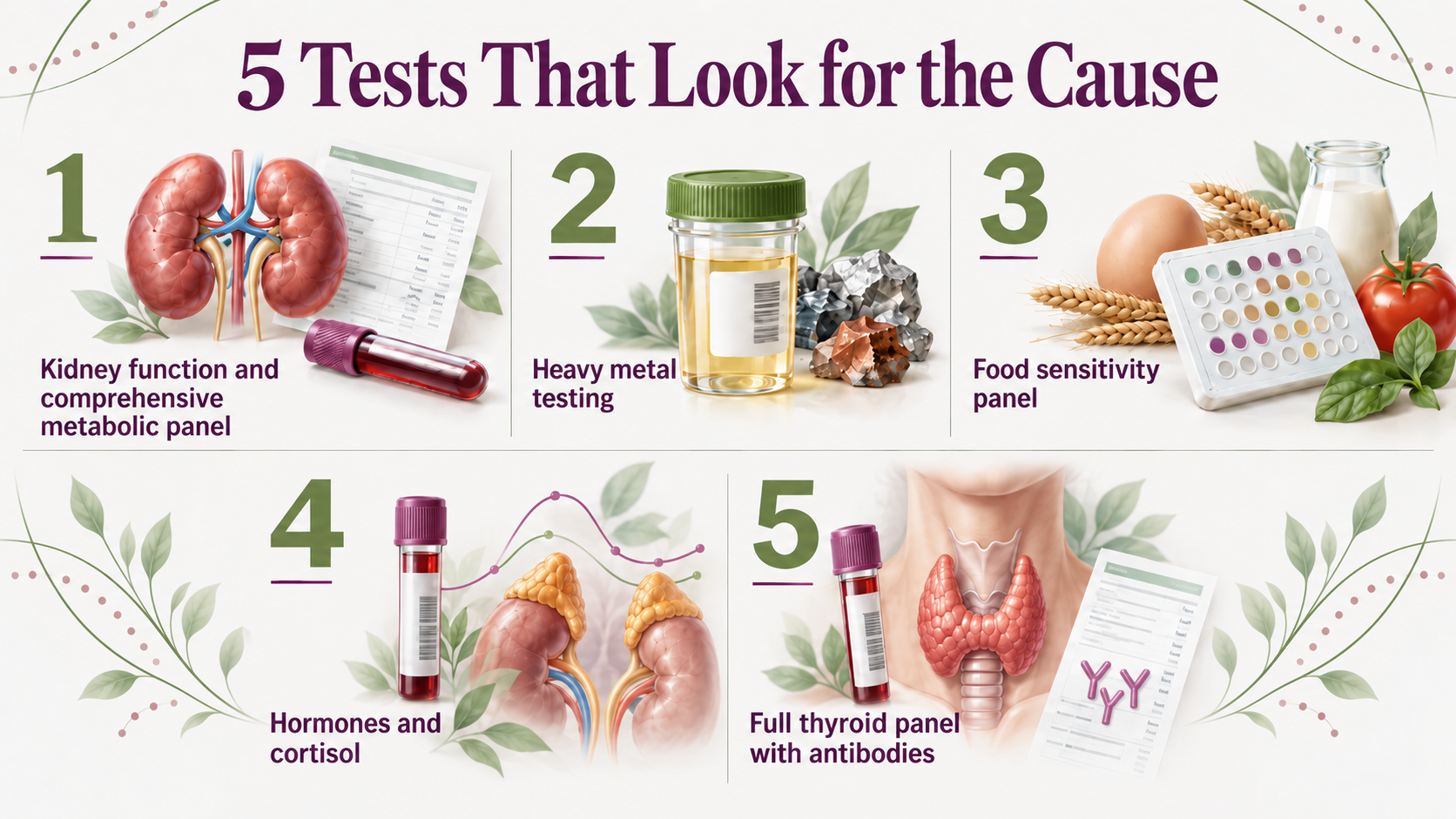
Naturopathic testing evaluates five areas: kidney function, heavy metals, food sensitivities, hormones and cortisol, and a full thyroid panel with antibodies.
Red beets, arugula, garlic, dark leafy greens, and wild-caught fatty fish support kidney function and blood vessel health.
NPG selects supplements such as magnesium, quercetin, CoQ10, and fish oil based on each patient's underlying cause.
How Inflammation Raises Blood Pressure
High blood pressure means your body pushes blood with more force to reach vital tissues. According to Dr. Katz, inflammation is the main reason. Inflamed blood vessels tighten, which narrows the path blood has to travel. To keep blood flowing to your heart, brain, and kidneys, your body raises the pressure. Without that increase, those organs would not receive enough blood, which can lead to a heart attack or stroke.
Blood Pressure Categories
The American College of Cardiology and the American Heart Association group blood pressure readings into categories:
A reading of 120 over 80 is generally considered normal.
A reading above 140 over 90 is high.
A reading above 180 over 120 is severe and requires hospital care.
Stage one and stage two hypertension fall between these points. The stage is based on your readings at the doctor's office.
Acute Versus Chronic High Blood Pressure
An acute rise in blood pressure is temporary. It can result from an infection, a kidney problem, or anxiety during a medical visit, known as white coat syndrome. Chronic high blood pressure stays above the normal range throughout the day, every day. Dr. Katz describes this as a state of constant inflammation. Chronic elevation increases the risk of heart attack and stroke and requires ongoing monitoring and management by a physician.
How to Get an Accurate Home Reading
Home readings are useful only when they are taken correctly. Taking several back-to-back readings produces inaccurate results because the cuff compresses your arteries during the first reading and affects the readings that follow. The most accurate result is a single reading taken after sitting quietly for a few minutes.
Equipment also affects accuracy. Wrist and arm cuffs require good quality batteries. Machines in grocery stores and pharmacies are accurate only when they are recalibrated regularly.
At NPG, the guideline is no more than one reading per day. Checking more often can raise blood pressure on its own, because focusing on the numbers creates anxiety. To see both morning and evening patterns, Dr. Ryder uses a simple schedule: one reading each evening for one week, then one reading each morning the following week.
Consistent timing matters. Morning readings are comparable only to other morning readings, and evening readings only to other evening readings. A written record of every reading shows whether your blood pressure is trending up or down and at what times of day.
Symptoms and Long-Term Risks
Symptoms associated with high blood pressure include headaches, blurred or double vision, lightheadedness, fatigue, heart palpitations, nosebleeds, shortness of breath with light activity such as walking across a parking lot or climbing stairs, nausea and vomiting, irregular heart rhythms, chest pain, and anxiety. Dr. Ryder also monitors blood pressure in patients with glaucoma, which she describes as elevated pressure in your body reflected in your eyes.
Many people have no symptoms. For many patients, the first symptom is a heart attack or stroke, which is why high blood pressure is known as the silent killer. It is also linked to conditions beyond your heart, including kidney problems. Over time, uncontrolled hypertension can lead to heart attack, stroke, dementia, cognitive decline, and heart failure.
The Role of Genetics
Many patients attribute their high blood pressure to family history. Dr. Katz notes that purely genetic cases exist but are uncommon. More often, patients share the same lifestyle habits as parents who had high blood pressure, and they develop the same condition. Attributing blood pressure to genetics alone can also reduce the motivation to make changes, since the cause appears to be outside your control.
Genetic outcomes depend on two factors: genes and environment. Environment includes diet, what you drink, and daily lifestyle. The same principle applies to cholesterol and diabetes. A genetic tendency may be present, but diet, lifestyle, consistent effort, and appropriate medical care influence how much that tendency affects your health.
Frequent Urination and Blood Pressure
Frequent urination can signal high blood pressure. In men, it is often attributed to the prostate, and an enlarged prostate is a common cause, particularly with age. When frequent urination is not related to the prostate or to high water intake, Dr. Katz evaluates blood pressure as a possible cause.
Your body often signals the need to urinate in order to remove excess salt. Because salt raises blood pressure, eliminating the excess helps lower it. For the same reason, Dr. Katz explains that regularly holding urine for long periods keeps excess salt in your body longer, which raises blood pressure. At NPG, urination that is more frequent than normal prompts a blood pressure check, along with a prostate evaluation for men.
Testing for the Underlying Cause
At NPG, as in conventional medicine, a hypertension diagnosis requires elevated readings at three separate visits. This accounts for white coat syndrome, in which anxiety at a medical visit temporarily raises blood pressure.
Listening to your heart with a stethoscope can identify arrhythmias and heart rate abnormalities. Beyond the physical exam, testing focuses on five areas that can contribute to high blood pressure.
Kidney Function and a Comprehensive Metabolic Panel
Your kidneys are a main regulator of blood pressure. A comprehensive metabolic panel measures blood sugar, kidney function, and electrolytes, all of which can affect blood pressure.
Heavy Metal Testing
Dr. Ryder notes that lead is linked to all forms of cardiovascular disease and increases plaque in your arteries. In her clinical experience, nearly anyone over 40 is likely to carry some level of heavy metals.
A standard blood test measures only current exposure. It does not measure heavy metals stored in your tissues from past exposure. At NPG, heavy metal testing uses an IV to release metals from your tissues so the results reflect accumulated levels. For patients with hypertension and no other identified cause, heavy metal testing is part of the workup. Heavy metals can impair kidney function, which can affect blood pressure.
When lead levels are elevated, chelation therapy removes it. Chelation also removes mercury, which is linked to neurological conditions, as well as cadmium and aluminum, which can affect your brain, your skin, and other body systems.
Food Sensitivity Testing
Cardiovascular disease is an inflammatory condition. According to Dr. Katz, approximately 80 percent of your body's inflammation is connected to your digestive tract. Addressing that inflammation requires identifying the foods that cause it, and a food sensitivity panel is the most direct way to do so. Food sensitivity testing is a regular part of NPG's approach to metabolic and digestive health.
Many patients believe food does not affect them. In Dr. Ryder's experience, that is rarely the case. A food can cause inflammation in tissues throughout your body without producing noticeable digestive symptoms such as gas or bloating. Dr. Katz notes that standard gastrointestinal workups, including scopes and imaging, do not identify which foods are contributing to inflammation.
Hormones and Cortisol
Hormone testing options include a 24-hour urine test, a shorter five-point urine test, blood testing, and saliva testing. Dr. Ryder prefers the 24-hour urine test. When a hormone imbalance is identified as the cause of hypertension, treatment can address it directly.
This evaluation includes cortisol, your body's primary stress hormone. Excess cortisol raises blood pressure, and low cortisol can lower it. Cortisol is not commonly included in routine annual testing, and insurance coverage for it is often limited, so it frequently goes unmeasured.
A Full Thyroid Panel
A complete thyroid panel includes thyroid antibodies to screen for autoimmune thyroid disease. Many conventional lab panels measure only TSH. Your brain produces TSH, which signals your thyroid to make more or less hormone. It does not directly measure thyroid function. Free T3 is the active thyroid hormone. In autoimmune thyroid conditions such as Hashimoto's, your immune system attacks your thyroid, and adjusting medication alone does not address the cause. Dr. Katz emphasizes that a full panel is not a reason to stop thyroid medication. Its purpose is to identify the cause, which a single marker cannot do.
Foods That Support Kidney and Blood Vessel Health
Your kidneys play a central role in regulating blood pressure. For patients with hypertension, Dr. Ryder focuses on foods that support kidney function.
Vegetables and Fruits
Supportive vegetables and fruits include organic red beets, dark leafy greens, cabbage, cauliflower, bell peppers, berries, cranberries, red grapes, garlic, onions, and sweet potatoes.
Beets can turn urine red, which is often mistaken for blood in the urine. Dr. Katz has seen patients come to the office, and some go to the emergency room, for this reason. In these cases, a urinalysis is normal, and the color change is traced to beets in the diet.
Fatty Fish
Fatty fish support kidney function. Options include albacore tuna, salmon, herring, sardines, mackerel, trout, pollock, sea bass, and mussels. Swordfish is also a fatty fish, but Dr. Ryder limits it because of its higher heavy metal content. Wild-caught fish is preferred.
Nitric Oxide Foods and Pomegranate Juice
Celery, beets, green leafy vegetables, garlic, and arugula support nitric oxide production. Nitric oxide dilates blood vessels and improves blood flow. These vegetables are also high in antioxidants, which reduce the inflammation that narrows blood vessels. Less inflammation supports lower blood pressure.
Pomegranate juice acts on the same pathway as ACE inhibitors, a class of blood pressure medication. ACE inhibitors are synthetic drugs that block specific pathways. Pomegranate juice produces a more modest reduction, which may be sufficient for some patients. Dr. Ryder finds it most useful when blood pressure is beginning to rise and the trend is identified early. Larger amounts do not provide greater benefit. According to Dr. Ryder, two ounces a day can make a difference.
Oatmeal, Cinnamon, and Seaweed
Dietary fiber helps reduce both cholesterol and blood pressure. For oatmeal, Dr. Katz specifies organic steel-cut oats, unsweetened, without prepackaged dried fruit.
According to Dr. Ryder, studies show that as little as half a teaspoon of cinnamon can lower both systolic and diastolic blood pressure, the top and bottom numbers. Cinnamon also helps regulate blood sugar, which is relevant because diabetes and hypertension frequently occur together, and it can support weight loss. Our articles on blood sugar testing and how to reverse insulin resistance naturally cover this connection in more detail.
Seaweed is high in fiber, which can lower blood pressure and cholesterol. It also contains iodine, which supports thyroid function when low thyroid contributes to blood pressure problems. However, seaweed is often high in salt, which can work against blood pressure goals when salt is a factor. Dr. Katz prefers organic seaweed, since some products contain MSG and other additives. Seaweed sheets can also be used as a wrap with rice or cauliflower rice and a protein.
Weight, Exercise, Alcohol, and Stress
Weight Loss
For patients who are overweight and have hypertension, weight loss is a primary goal. Dr. Ryder notes that the HCG diet can produce 15 to 20 pounds of weight loss in less than a month. Prescription appetite suppressants approved for diabetes, including semaglutide medications such as Ozempic, have also been shown to support weight loss. Working with a nutritionist or a personal trainer and increasing physical activity also help. According to Dr. Ryder, weight loss has been shown to help patients reduce their blood pressure medication dose or discontinue it, a decision made with the prescribing physician.
Excess weight is generally associated with elevated inflammation markers, which tighten blood vessels and raise blood pressure. Reducing weight lowers inflammation. Dr. Katz notes that people who are not overweight can still have significant inflammation from other causes, such as autoimmune or thyroid conditions.
Exercise
Exercise increases oxygen delivery and relaxes blood vessels, both of which help lower blood pressure. It also supports weight loss. Dr. Ryder explains that increased oxygen, water intake, and exercise help create an alkaline environment in your blood vessels that discourages the growth of bacteria, viruses, and free radicals.
Alcohol, Smoking, and Stress
Reducing alcohol and smoking benefits overall health and is especially important for people with hypertension. Reducing stress, or developing effective coping strategies, lowers cortisol production, which helps reduce blood pressure. However, stress does not always produce high cortisol. Cortisol can also be too low, so a physician experienced in interpreting it should evaluate and monitor cortisol levels.

Supplements Used for Blood Pressure Support
Dr. Steven Katz and Dr. Loreena Ryder do not direct anyone to start or stop medications or supplements. The supplements below are ones they have used with patients for this condition. Each patient is evaluated individually, and a supplement that is appropriate for one person may not be appropriate for another. Decisions about supplements should be made in conversation with your physician or at an appointment at NPG.
Nitric Oxide Support: Magnesium, Beets, and Arginine
Magnesium increases nitric oxide production, which widens blood vessels and lowers blood pressure. It also supports digestion and other body functions. Magnesium comes in a dozen or more forms, and they are not interchangeable. One form has a laxative effect, and others are better suited to brain health and sleep. Excess magnesium can lower heart rate, which is a concern for people whose heart rate is already low.
Red beets are available as powders and capsules. Arginine, available in capsule form, also increases nitric oxide. Dr. Ryder regards nitric oxide as an important factor in blood pressure regulation, whether it comes from food or supplements.
Antioxidants: Vitamin C, Quercetin, Grape Seed Extract, and Resveratrol
Vitamin C is a natural diuretic that helps your body remove excess fluid. As an antioxidant, it reduces inflammation in your blood vessels and improves vessel integrity, strengthening veins and arteries and improving blood flow.
Quercetin reduces oxidative stress and acts on the renin-angiotensin system, which regulates blood pressure. It works with your kidneys and liver to widen blood vessels and can significantly reduce systolic blood pressure. Quercetin is also a natural antihistamine that can help with allergies and mucus production.
Grape seed extract and resveratrol are both derived from grapes. Both reduce oxidative stress, which lowers inflammation in your blood vessels and improves vessel integrity and blood flow. Resveratrol is often associated with red wine, but red wine is not a reliable source. Alcohol can reverse the benefits of the grape compounds, and many inexpensive wines are flavored and contain added sugar and sulfites. When resveratrol is used to support blood pressure, heart health, and blood-clot prevention, Dr. Katz uses it in supplement form.
Herbal Support: Rauwolfia and Centella
Rauwolfia acts on the nerve pathways of your heart and blood vessels to lower blood pressure. Dr. Katz regards it as likely the strongest herb for blood pressure, which is why it is used only with a physician's approval. Used incorrectly, it can lower blood pressure too far and cause fainting, including while walking or driving. Many blood pressure medications were developed from Rauwolfia, just as aspirin was developed from white willow bark.
Centella acts on the same blood pressure regulating pathway. It works with your kidneys and liver to signal your blood vessels to widen, improving circulation and lowering blood pressure.
When supplements are used only to treat symptoms, they function much like medications. For this reason, NPG focuses on identifying the underlying cause first. Supplements can be very beneficial, but when used incorrectly, they can cause side effects.
CoQ10, Potassium, Vitamin K2, Vitamin D, B Vitamins, and Fish Oil
CoQ10 has been shown in numerous studies to reduce systolic blood pressure, and it is cardioprotective. Statin medications deplete CoQ10, so Dr. Ryder regards replenishment as essential for patients taking a statin. Dr. Katz notes that statins are prescribed to protect your heart by lowering cholesterol, yet they deplete a nutrient that protects your heart. For patients on a statin, CoQ10 is a question to raise with the prescribing physician. Statins and cholesterol testing are covered in our article on high cholesterol.
Sodium and potassium work in balance. Sodium raises blood pressure, and potassium can lower it. When excess sodium contributes to high blood pressure, potassium can help. Many diuretic medications, covered in Part 1, also lower potassium levels, which may require replacement. Taking potassium incorrectly can damage your heart, so take potassium only under a physician's guidance.
Vitamin K2 is often combined with vitamin D in supplements. Low K2 reduces calcium absorption into your bones. The unabsorbed calcium remains in your bloodstream, where it can form deposits in your arteries and contribute to blockages and hardening. Hardened arteries make your heart work harder, which raises blood pressure. According to Dr. Ryder, you can get K2 from vegetables, although many people still need a supplement.
Vitamin D is a natural anti-inflammatory. Low vitamin D is correlated with a higher risk of high blood pressure, although Dr. Katz notes that correlation does not establish causation. Deficiencies in vitamins B2, B6, and B9 have also been correlated with hypertension. Fish oil provides omega-3 fatty acids, which are anti-inflammatory and counterbalance inflammatory omega-6 fats. Reducing whole-body inflammation improves blood pressure.
In-Office Procedures: Ozone IV Therapy and Chelation
NPG offers two in-office procedures used in blood pressure care, both part of the IV therapies available at the practice. Ozone IV therapy, also called autohemotherapy, provides additional oxygen to your body, which helps dilate blood vessels. It also fights infection and reduces inflammation throughout your body. Chelation, described in the testing section above, removes heavy metals such as lead. Dr. Katz regards both procedures as highly effective for treating blood pressure and its underlying causes.
Our article on IV therapy and gut absorption explains how IV delivery differs from taking nutrients by mouth.
Why Identifying the Cause Comes First
Foods, supplements, and procedures are most effective when they target the cause of increased blood pressure. That reason differs from patient to patient. It may be kidney function, heavy metal exposure, a food sensitivity, a cortisol imbalance, or an unaddressed thyroid condition. Identifying the cause allows treatment to be specific, not general.
Inflamed and narrowed blood vessels affect more than blood pressure. The same process contributes to poor circulation and to varicose veins.
A whole-health assessment evaluates kidney function, heavy metals, food sensitivities, hormones, and thyroid function together. A personalized evaluation can help determine which of these factors apply to you, based on your symptoms, lab results, history, and goals.
When Further Evaluation Is Warranted
A reading above 180 over 120 is a medical emergency that requires hospital care. Chest pain, irregular heart rhythms, and shortness of breath with ordinary activity warrant prompt clinical evaluation. Frequent urination that is not explained by fluid intake or the prostate can also indicate elevated blood pressure. Patients on blood pressure medication should make any changes with their prescribing physician. Dr. Katz and Dr. Ryder do not direct patients to start or stop medications.
This content is for educational purposes only and is not medical advice. Make treatment decisions with a qualified healthcare provider who understands your symptoms, history, labs, and goals.
FAQs
Can pomegranate juice lower blood pressure?
Pomegranate juice acts on the same pathway as ACE inhibitors, a class of blood pressure medication, and can modestly reduce blood pressure. According to Dr. Ryder, two ounces a day can make a difference, and larger amounts add no benefit. It is most useful when you identify a rising trend early.
Does red wine benefit your heart and blood pressure?
Generally, no. The alcohol in wine tends to reverse the benefits of grape compounds such as resveratrol, and many inexpensive wines contain added sugar, flavoring, and sulfites. When resveratrol is used for heart health, Dr. Katz uses it as a supplement.
Why can beets turn urine red?
The red pigment in beets can pass into the urine and resemble blood. In these cases, a urinalysis is normal, and the color change is traced to beets in the diet.
Can frequent urination be a sign of high blood pressure?
Yes. Your body often urinates to remove excess salt, which raises blood pressure. When frequent urination is not explained by high water intake or, in men, by the prostate, Dr. Katz evaluates blood pressure as a possible cause.
Why are CoQ10 and statins discussed together?
Statin medications deplete CoQ10, a cardioprotective nutrient that studies have shown can reduce systolic blood pressure. For patients taking a statin, Dr. Ryder regards replenishing CoQ10 as essential, and it is a question for the prescribing physician.
What does Part 1 of this series cover?
Part 1 explains blood pressure numbers, the most common causes of high blood pressure, how hypertension is diagnosed, and how conventional medications work. This article continues with the naturopathic approach.
Ready to Take a Closer Look at What Your Body Is Telling You?
Dr. Steven Katz and Dr. Loreena Ryder offer personalized, root-cause evaluations for patients who are tired of being told their labs look fine.
Schedule a consultation at naturopathicgroup.com/contact
Phone: (480) 451-6161
Email: [email protected]
Location: Naturopathic Physicians Group, 9200 E. Raintree Dr., Suite 150, Scottsdale, AZ 85260