

High Cholesterol: What Your Numbers Mean and What Standard Testing May Miss
You go in for routine bloodwork. Three days later, somebody calls and tells you your cholesterol is high. Maybe a prescription comes with it. Maybe you get told to watch the eggs and come back in six months. What you may not get is an explanation of what that number represents, what else on the page matters, or why it moved in the first place.
So you leave with a label and very little context. That is the part worth fixing. Cholesterol matters. It is worth measuring. It is also one part of a much larger cardiovascular picture, alongside blood pressure, blood sugar, smoking, family history, age, medications, kidney health, and previous heart or vascular disease.
Key Takeaways
Hypercholesterolemia and hyperlipidemia are terms used when cholesterol or other blood lipids are outside the desired range.
LDL, HDL, triglycerides, non-HDL cholesterol, and the patient's overall risk profile provide more useful context than total cholesterol alone.
Atherosclerosis involves cholesterol-containing particles, inflammation, and changes within the artery wall. One laboratory value cannot explain it.
Additional tests may help selected patients, but no advanced marker is automatically necessary for everyone.
Medication decisions should be based on individualized cardiovascular risk, expected benefit, possible side effects, and a conversation with the prescribing clinician.
What "High Cholesterol" Even Means on Paper
The vocabulary is the first thing that trips people up, because nobody writes it in plain English. Hypercholesterolemia. Hyperlipidemia. Lipid disorder. Each one means that something in your blood lipids needs attention.
Here is what the label does not tell you. It does not explain why the number changed. It does not calculate your complete cardiovascular risk. And it does not automatically point to one treatment that fits everybody.
LDL goals aren't identical for everyone. Someone who already has cardiovascular disease may have a very different target from someone at lower risk. If nobody explained how your goal was chosen, that is a fair question to ask.
High Cholesterol Is Usually Silent
High cholesterol is quiet. Most people cannot feel it, and a blood test is how you know it is there. That is exactly why screening matters.
The symptoms people often connect with cholesterol are usually signs that something more urgent may be happening. The warning signs include chest discomfort; pain in the arm, back, neck, jaw, or stomach; shortness of breath; sudden weakness or numbness; facial drooping; and slurred speech.
Don't watch and wait on these symptoms. Call 911. Even if reflux seems possible, you should never diagnose new or unexplained chest pain from the couch.
Once you've ruled out an emergency, recurring digestive symptoms deserve their own evaluation. Our article on five root causes of acid reflux explains why that burning pressure can have a very different cause.
Cholesterol also travels in company. High blood pressure, diabetes, smoking, kidney disease, and family history can change what the same cholesterol result means. If you have read our post on blood sugar testing beyond a standard panel or our follow-up on insulin resistance, this is where those conversations meet your heart. They are not separate problems living on separate pages.
Why Cholesterol Numbers Need Context
Your standard panel usually gives you total cholesterol, LDL, HDL, and triglycerides. Some reports also calculate non-HDL cholesterol, VLDL, or cholesterol ratios. Each number adds a different piece.
Here is the part people miss. A flagged number is not the same thing as a complete risk assessment.
Two people can walk in with the same LDL and leave with different recommendations. One may have diabetes, high blood pressure, kidney disease, or a strong family history. The other may not. The laboratory number is the same. The clinical picture is not.
Ratios can add context, but they don't replace LDL or an overall risk discussion. What matters is how the values fit together, how long they have been elevated, and what else is happening in the patient's health.
That is not an argument against medication. We are never telling you to stop taking something your clinician prescribed. Understanding your own labs simply gives you better questions to bring back to the person who ordered them.
Five Additional Markers Discussed in This Episode
This is the part people usually want to skip ahead to. The episode covers five additional markers, and each one answers a different question.
One limit belongs at the top: this is not a universal checklist. More testing is not automatically better. A useful test answers a clear question and could change what happens next.
Apolipoprotein B. ApoB sits on LDL and other particles that can contribute to plaque. Each particle carries one ApoB molecule, so the test helps estimate how many atherogenic particles are circulating. That can be useful when the LDL number and particle count may not tell the same story.
Apolipoprotein A1. ApoA1 is the main protein associated with HDL particles. It can add context when interpreted alongside ApoB, but neither number stands alone.
Homocysteine. Homocysteine is an amino acid measured in the blood. A high result can be associated with cardiovascular risk, but it does not tell you the cause. Vitamin status, kidney function, genetics, medications, and other factors can all move the number. That is why the result needs interpretation before somebody reaches for a supplement.
High-sensitivity C-reactive protein. The hs-CRP test looks for a low level of C-reactive protein associated with inflammation. It is not a heart-only marker. An infection, injury, or inflammatory condition can push it up too, so timing and context matter.
Lp-PLA2, sometimes ordered as a PLAC test. Lp-PLA2 is an enzyme associated with lipoproteins and inflammation in blood vessels. It is not the same thing as oxidized LDL. Its role is narrower than standard risk assessment, LDL, non-HDL cholesterol, ApoB, lipoprotein(a), or coronary calcium scoring. In other words, it needs a reason to be ordered.
The bigger dietary picture matters more than a one-fryer explanation. A pattern built around highly processed foods, refined carbohydrates, and foods high in saturated or trans fats can work against cardiovascular health. One food is rarely the whole story.
Not everybody needs these five tests, and we do not run all of them on every annual panel. Another important marker the original episode did not cover is lipoprotein(a), or Lp(a), which is largely inherited.
The goal is not to collect the longest list of numbers. It is to find the information that could change the risk discussion, the follow-up, or the decision in front of you.
Can Your Cholesterol Be Too Low?
Cholesterol is a building block. Your body uses it in cell membranes and to make steroid hormones and bile acids. That fact is real. It also gets stretched into a claim that lowering LDL automatically drains the body of hormones. The evidence does not support that conclusion.
For people at higher cardiovascular risk, lowering LDL can reduce heart attacks and strokes. The right target depends on the person, not on a race to the lowest number possible.
Here is what still deserves attention. If fatigue, muscle pain, weakness, digestive problems, sexual symptoms, menstrual changes, or another new symptom begins after a medication is started or changed, tell the prescriber. Timing does not prove causation, but it is useful information.
The same is true when a young woman stops menstruating. Cholesterol may be one small part of the evaluation, but nutrition, weight changes, exercise, stress, thyroid function, prolactin, ovarian function, medications, and pregnancy status can matter too.
The point is not to fear lower cholesterol. It is to choose an individualized goal, monitor what matters, and have a medication conversation that includes both benefit and possible side effects.
What Imaging Shows That Blood Does Not
Bloodwork tells you what is circulating. Imaging shows structure, function, rhythm, or plaque, depending on the test. Those are different questions.
The coronary artery calcium score is the one many patients ask about. It looks for calcified plaque in the coronary arteries and can help when a preventive-treatment decision is still uncertain.
A score of zero means no calcified plaque was detected. It does not mean every artery is clear, and it does not rule out noncalcified plaque or every form of cardiovascular disease. This is not a routine baseline for every adult or a scan that automatically gets repeated every few years.
A Holter monitor records heart rhythm during ordinary life and sleep. It is monitoring, not imaging. A stress test asks how the heart responds to exertion. An echocardiogram uses ultrasound to show structure and pumping function. A cardiac MRI gives detailed information about heart tissue and structure. A coronary angiogram, also called cardiac catheterization, uses contrast dye to show narrowing in coronary arteries. It gives direct information, but it is invasive.
The important part is simple: these tests are not interchangeable. An abnormal cholesterol result does not automatically mean you need any of them, much less all of them.

The Medication Conversation Nobody Walks You Through
Statins lower LDL and reduce cardiovascular risk in appropriate patients. They are not the only option. Ezetimibe, bempedoic acid, PCSK9-targeting therapies, and other medications may be recommended depending on risk, treatment goals, tolerance, and coverage. Fibrates may be used when elevated triglycerides are the larger concern.
Muscle pain is the most commonly discussed side effect. Severe muscle injury, called rhabdomyolysis, is recognized but rare. If muscle pain or weakness begins after you start or change a statin, discuss it with your prescribing physician.
Different medications bring different monitoring questions. These include liver enzymes, blood sugar, kidney function, and drug interactions. New symptoms deserve review, but don't automatically blame the medication without an appropriate evaluation.
It’s important to state that these medications save lives. Nothing discussed here is a reason to stop taking one. If you want to change something, discuss it with the clinician who prescribed it.
The Sugar Connection Most People Miss
Ask what affects cholesterol, and most people say dietary fat. Refined carbohydrates and added sugar belong in the conversation too, especially when triglycerides, insulin resistance, fatty liver, or low HDL show up beside the cholesterol result.
The connection is real, but it is not as simple as saying that every serving of sugar turns directly into LDL. A diet high in refined carbohydrates and added sugar can raise triglycerides, worsen insulin resistance, and contribute to excess calorie intake. LDL may respond differently from one person to another.
That is why cholesterol, blood sugar, liver health, weight, movement, sleep, and alcohol keep appearing in the same conversation. The pattern matters more than one ingredient.
This is the same phenomenon as discussed in our post on fatty liver. It is also why a cholesterol discussion often becomes a metabolic-health discussion before it is over.
What the Doctors Look At When Cholesterol Comes Up
We are not telling you to start something or stop something. We can show you what belongs in the room when cholesterol comes up, because one number rarely answers the whole question.
The available lipid results. Total cholesterol, LDL, HDL, triglycerides, and non-HDL cholesterol can each add information. Which ones matter most depends on the question being asked and the patient's overall risk.
Inflammation and atherogenic particles. Atherosclerosis involves ApoB-containing particles, the artery wall, immune activity, and other risk factors. Homocysteine and hs-CRP may add information in selected situations. They do not replace LDL, non-HDL cholesterol, ApoB, blood pressure, diabetes assessment, smoking history, or family history.
Dietary pattern and digestive history. Food choices can affect triglycerides, blood sugar, blood pressure, weight, and overall risk. Digestive symptoms or suspected food reactions begin with a careful history. A broad food-sensitivity panel is not automatically part of a cardiovascular workup.
Environmental exposure when history supports it. Lead exposure is associated with cardiovascular harm, but that does not make heavy-metal testing routine for every patient with high cholesterol. Work, housing, contaminated products, smoking, and other exposure risks help decide whether the question is worth pursuing.
Smoking and alcohol. Smoking damages blood vessels and increases cardiovascular risk. Excess alcohol can raise triglycerides and contribute to fatty liver and high blood pressure. Both belong in a thorough history.
Fiber, movement, sleep, and stress. Soluble fiber, regular movement, sufficient sleep, and stress management can all support cardiovascular health. The plan still has to fit the person's abilities, diagnoses, medications, and goals.
Therapies offered by the practice. NPG offers several IV therapies. These therapies, such as ozone, hydrogen peroxide, chelation, Chelox, or Chelozone, do not claim to remove plaque or prevent a heart attack. Chelation has established uses for specific toxic-metal exposures. Its cardiovascular use remains controversial.
Dr. Katz is direct about the framing. Every decision is made case by case. Not everybody needs another test, a supplement, an IV, or a new treatment.
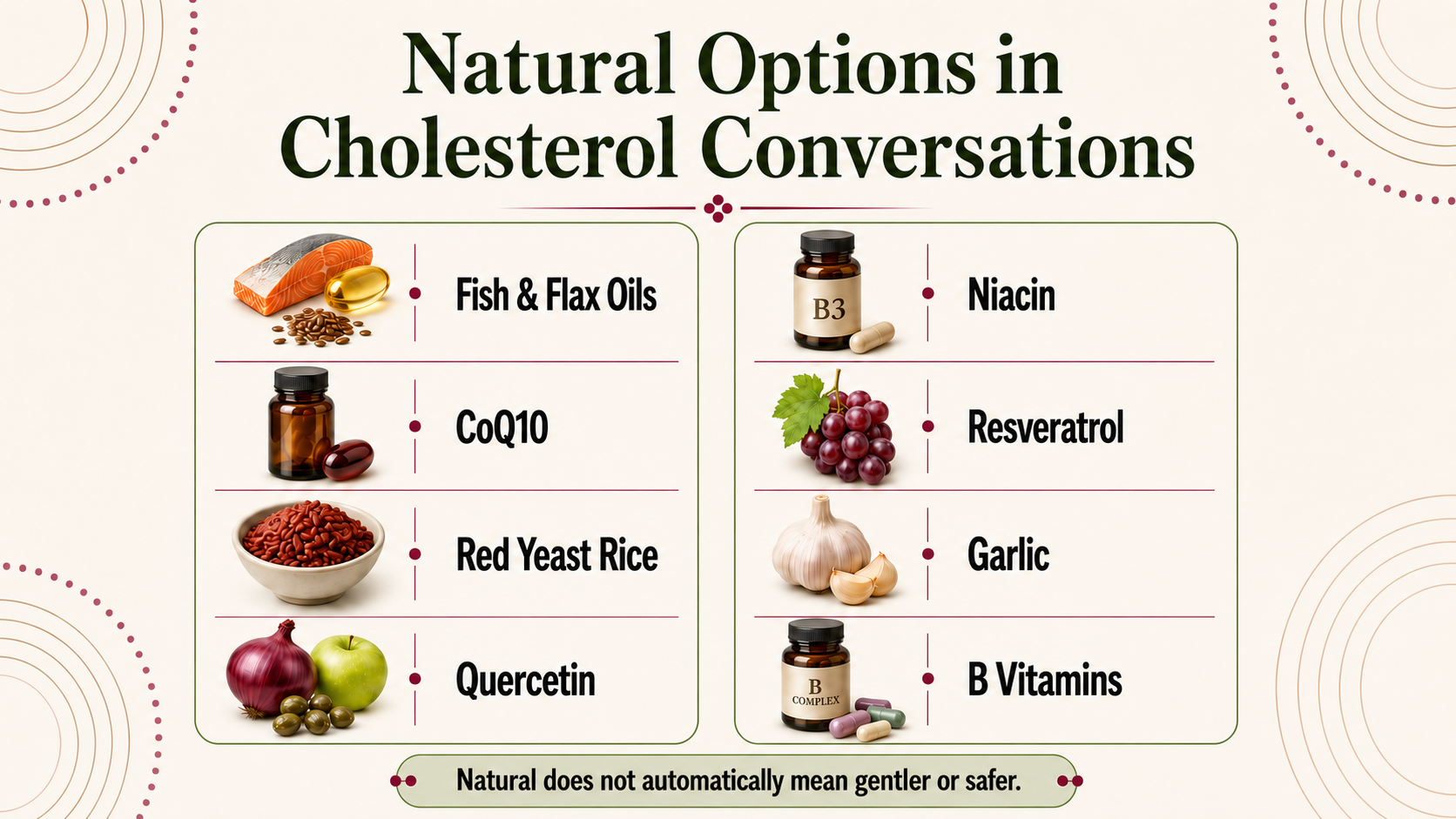
The Natural Options That Come Up in Cholesterol Conversations
This is the section people usually want first. It also needs the clearest boundary. None of what follows is a recommendation for you. These are options that come up in cholesterol conversations, and each has its limits.
Fish oil and flaxseed oil. Fish oil generally provides EPA and DHA. Flaxseed oil provides ALA, which the body converts only partly into EPA and DHA. Some omega-3 products can lower triglycerides, but the products are not interchangeable. Quality, dose, interactions, bleeding risk, and the reason for using them all matter.
CoQ10. Statins can lower circulating CoQ10. Individual study results have varied, but the overall evidence does not support routine CoQ10 as a reliable treatment for statin-related muscle pain. It is not mandatory for everybody taking a statin.
Red yeast rice. Some products contain monacolin K, which is chemically identical to lovastatin. That means statin-like effects, interactions, and side effects can come with it. Potency and contamination vary too. Natural does not automatically mean gentler or safer.
Quercetin. Quercetin has been studied for several metabolic and cardiovascular outcomes. The evidence is not strong enough to present it as a primary cholesterol treatment. Medications, kidney function, dose, and treatment goals still matter.
Niacin. Niacin can change lipid values. That does not automatically mean it improves cardiovascular outcomes. Flushing, liver injury, blood-sugar effects, gout, and interactions are part of the tradeoff.
Resveratrol. Resveratrol is a polyphenol under active study. Current evidence does not support promises that a supplement will lower cholesterol, prevent clots, or extend life.
Garlic. Garlic is a useful food, and concentrated supplements may have modest lipid effects. They can also interact with blood-thinning medications and increase bleeding risk.
B vitamins. B12, B6, and folate status can influence homocysteine. But lowering the number with supplements does not automatically prevent cardiovascular events. The clinical reason matters more than the urge to chase a laboratory value.
This content is for educational purposes only and is not medical advice. Treatment decisions, including any changes to supplements or medications, should be made with a qualified healthcare provider who understands your symptoms, history, labs, and goals.
What Prompts a Closer Look
Cholesterol is rarely the whole story. It is usually one number sitting on top of several others.
Certain patterns tend to bring people in. Maybe the result was never explained. Maybe cholesterol keeps rising, heart disease runs early in the family, or new symptoms appear after a medication change. Sometimes high triglycerides sit beside blood-sugar problems. Sometimes there is simply a quiet sense that nobody has put the pieces together yet.
A comprehensive assessment places cholesterol next to blood pressure, blood sugar, medications, family history, lifestyle, and metabolic and digestive health. The result is a data point. It is not the entire assessment, and it is not a verdict.
Sometimes the next step is another test. Sometimes it is a medication conversation. Sometimes it is finally understanding what the existing information already says.
Frequently Asked Questions
Can I have a heart problem if my cholesterol is normal?
Yes. Cholesterol is one contributor to cardiovascular risk, not a test that rules every heart condition in or out. Blood pressure, diabetes, smoking, family history, age, kidney disease, and symptoms matter too. If you have possible heart-attack or stroke symptoms, call 911 regardless of what an earlier cholesterol result showed.
What tests belong on a complete cholesterol workup?
Start with a standard lipid panel and an overall cardiovascular risk assessment. Depending on the patient, a clinician may consider non-HDL cholesterol, ApoB, lipoprotein(a), hs-CRP, or another targeted test. A coronary calcium scan may help when a preventive-treatment decision is still uncertain. No advanced panel or imaging schedule fits everybody.
Is it possible for cholesterol to be too low?
The body needs cholesterol, but that does not mean medically appropriate LDL lowering automatically causes hormone deficiency. The target depends on cardiovascular risk, and lower goals are often used for higher-risk people. Review new symptoms after a medication change rather than automatically blaming the cholesterol number.
Does eating sugar really affect cholesterol?
It can affect the broader lipid and metabolic picture. Diets high in added sugar and refined carbohydrates can contribute to elevated triglycerides, insulin resistance, excess calorie intake, and sometimes lower HDL. LDL responses vary. The overall pattern tells you more than one ingredient.
What is a coronary calcium score and should I have one?
It is a CT scan that detects calcified plaque in the coronary arteries. It is most useful when the decision about preventive treatment remains uncertain after a standard risk assessment. A zero does not rule out noncalcified plaque or every heart condition. Whether the scan fits you depends on your age, symptoms, risk factors, and the decision it is meant to inform.
Take the Next Step
If your cholesterol results were never clearly explained, your numbers keep changing, heart disease runs in your family, or you want to discuss possible medication effects, Dr. Steven Katz and Dr. Loreena Ryder can discuss this with you.
They will review the information you already have, place it beside your history and medications, and decide whether anything else is actually needed. The goal is not more testing for its own sake. It is a clearer picture and a plan that fits the person sitting in the room.
Ready to take a closer look at what your body is telling you? Dr. Steven Katz and Dr. Loreena Ryder offer personalized, root-cause evaluations for patients who are tired of being told their labs look fine.
Schedule a consultation at naturopathicgroup.com/contact
Call: (480) 451-6161
Email: [email protected]
Location: Naturopathic Physicians Group, Scottsdale, Arizona
This content is for educational purposes only and is not medical advice. It reflects a discussion between Dr. Steven Katz and Dr. Loreena Ryder on the Your Health Is Wealth radio show. Iron supplementation can be harmful if taken without testing. Please review anything discussed here with your current physician or a qualified healthcare provider who understands your symptoms, history, labs, and goals before making changes to your care.