Why Anti-Inflammatories Stop Your Arthritis from Healing
You've been taking ibuprofen every morning for months. Maybe years. Your doctor told you it would help manage the inflammation in your arthritic joints. You trusted that advice because your doctor is the expert.
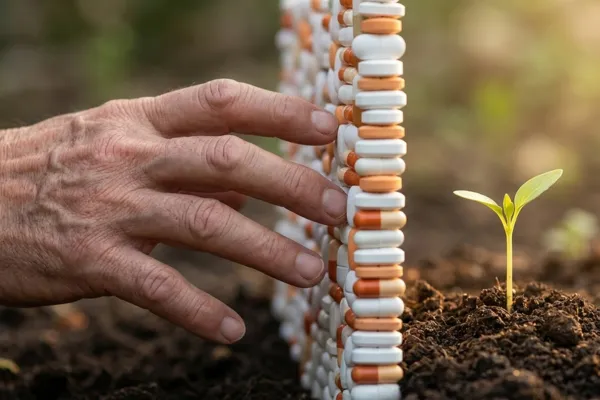
But here's what nobody told you. Every single time you take that anti-inflammatory medication, you're actively blocking your body's ability to heal the damaged tissue, causing your pain.
At Naturopathic Physicians Group in Scottsdale, Dr. Steven Katz and Dr. Loreena Ryder see this devastating pattern constantly. Patients arrive exhausted and frustrated after years of following conventional medical advice that made their arthritis progressively worse. They've taken ibuprofen daily. They've done cortisone injections. They've tried physical therapy. And their pain keeps intensifying despite doing exactly what their doctors told them to do.
If you're one of the millions of people suffering from chronic joint pain, planning your entire life around managing discomfort, and feeling dismissed when doctors say "it's just part of aging," you need to understand what's really happening inside your body when you take those medications.
You've Been Told Anti-Inflammatories Are the Solution
Let's talk about what actually happens when you go to your doctor complaining of joint pain.
They run a quick physical exam. Maybe they send you for an X-ray or an MRI. They see arthritis on the scan. Then they hand you a prescription for ibuprofen, naproxen, or another NSAID (non-steroidal anti-inflammatory drug). They tell you to take it regularly to manage the inflammation.
If the over-the-counter options don't work well enough, they might offer you a cortisone injection. Corticosteroids are powerful anti-inflammatories that deliver fast relief. You walk out of the office feeling hopeful that, finally, something is going to help.
And it does help. For a while. The swelling goes down. The pain decreases. You can move more easily. You think you're getting better.
But then the pain starts creeping back. The relief doesn't last as long as it used to. What used to work for six hours now only works for three. So you take more. You increase your dosage. You take it more frequently. Or your doctor prescribes something stronger.
If you're getting cortisone injections, that first shot might give you relief for nine months or even a year. The second injection works for maybe four to six months. The third barely makes a difference. And your doctor tells you that you can't have more than two or three injections in the same joint because of the risks.
What risks? Nobody explains that part clearly.
So you're left with limited options according to conventional medicine. Keep taking medications that require increasingly higher doses to work. Accept that cortisone injections have diminishing returns and can't be repeated indefinitely. Or start discussing surgery as the next step.
This is where most people give up. They accept that their body has failed them. They resign themselves to a lifetime of pain management rather than actual healing. They start planning their activities around their limitations instead of their interests.
The Truth Nobody Tells You About How Inflammation Actually Works
Here's what Dr. Katz and Dr. Ryder want you to understand about inflammation and healing.
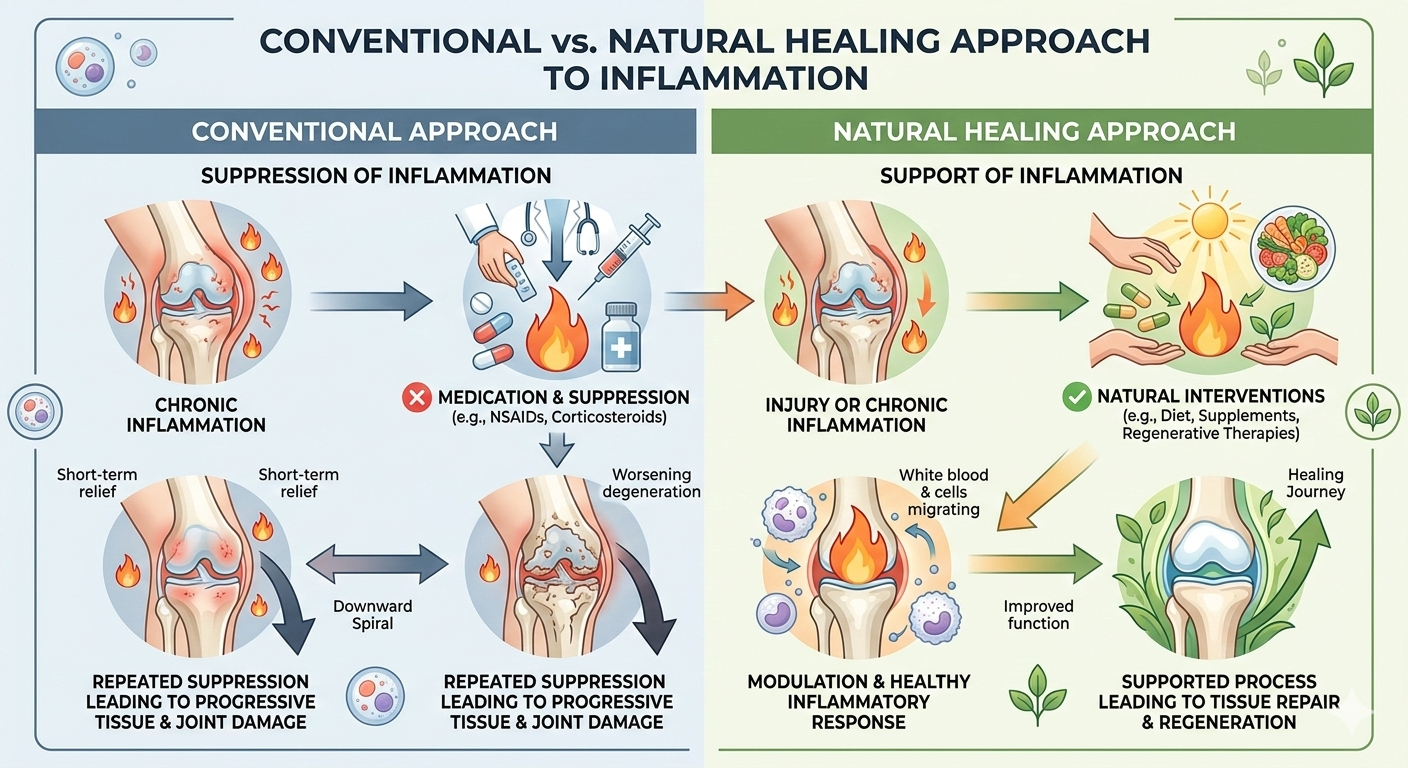
Inflammation is not your enemy. Inflammation is your body's healing signal.
When you injure tissue, whether it's a sprained ankle or degrading cartilage in your knee, your body immediately triggers an inflammatory response. Blood vessels dilate. Blood flow increases to the injured area. White blood cells rush to the site. The area swells and becomes warm.
This isn't damage. This is your immune system mobilizing to repair the injury.
The inflammation sends chemical signals throughout your body saying, "There's a problem here that needs to be fixed." Your immune system responds by sending specialized cells to clean up damaged tissue and begin the regeneration process. Fibroblasts arrive to produce new collagen. Growth factors stimulate tissue repair. Your body is actively working to heal itself.
When you take an anti-inflammatory medication, you shut down this entire process.
Anti-inflammatories block the production of prostaglandins, which are the chemical messengers that trigger inflammation. When you stop prostaglandin production, you stop the inflammatory response. The swelling goes down. The pain decreases. But you also stop the healing signals.
Your immune system no longer knows there's an injury that needs repair. The damaged tissue remains damaged. And because you're still using that joint, still putting stress on weakened ligaments and tendons, the injury actually gets worse over time.
This is why you need higher and higher doses of anti-inflammatories as months and years go by. The underlying damage is progressing. You're treating worsening injuries with symptom-suppressing medications that prevent healing.
Dr. Katz sees this constantly in his practice. He treats arthritis patients five to six times every single day. These are people who have followed their conventional doctor's advice for years. They've taken their medications religiously. They've done their cortisone shots. And they arrive at NPG with more severe joint damage than when they started treatment.
What Your Doctor Isn't Telling You About Cortisone Injections
Cortisone injections deserve their own discussion because they're presented as a more advanced treatment option when oral anti-inflammatories aren't enough.
Corticosteroids are synthetic versions of cortisol, a hormone your body naturally produces. When injected directly into a joint, they're incredibly powerful anti-inflammatories. They suppress immune system activity in that specific area. They reduce swelling dramatically. They provide fast pain relief.
But they also weaken the structural integrity of your ligaments and tendons with every single injection.
This isn't a secret. Medical literature documents this clearly. Corticosteroids inhibit collagen synthesis. They reduce the strength of connective tissue. They make ligaments and tendons more prone to tears and ruptures.
That's why conventional doctors limit you to two or three cortisone injections in the same joint. They know it causes cumulative damage. But they offer it anyway because conventional medicine is built around symptom management rather than healing.
Here's what typically happens with repeated cortisone injections. The first shot gives you six months to a year of relief. You're thrilled. You think you've finally found something that works. But the underlying joint damage continues progressing because the steroid is blocking your body's repair mechanisms.
When the pain returns, you get a second injection. This time you get maybe three to five months of relief. The effect is shorter because the joint damage is worse. The ligaments supporting that joint are weaker than they were before the first injection.
By the third injection, you might get a month or two of reduced pain. And your doctor tells you that's the last one you can have. Now what? The joint is more damaged than when you started. The supporting structures are weaker. And your only remaining option, according to conventional medicine, is surgery.
Dr. Katz emphasizes that patients need to understand they're not getting better during those months of reduced pain after a cortisone injection. The injury is actually getting worse. You just can't feel it as intensely because the steroid is suppressing the inflammatory signals.
The Misdiagnosis That Makes Everything Worse
There's another critical problem with how conventional medicine approaches arthritis treatment. Most doctors never actually examine you properly to identify what's causing your pain.
Dr. Katz calls this the "scan and treat" approach. You come in complaining of joint pain. The doctor orders an X-ray or an MRI. The scan shows arthritis. The doctor prescribes treatment based on what the scan shows.
But here's the problem. Imaging shows damage. It doesn't show weakness.
If you're over 40 and you get a scan of any joint in your body, there's probably going to be at least mild arthritis visible. That's just reality. If you live long enough, you're going to have some degree of wear and tear in your joints. But the presence of arthritis on a scan doesn't automatically mean that's what's causing your pain.
Most joint pain is actually caused by weakness in the ligaments and tendons that support the joint. When these connective tissues become loose or damaged, they can't properly stabilize the joint during movement. This creates abnormal stress patterns. It causes pain. It accelerates the wear and tear on cartilage.
But ligament and tendon weakness don't show up clearly on standard imaging. An MRI can't tell you that your ligaments are functioning at 60% of normal strength. It can't show you that subtle instability in your joint is creating pain and accelerating damage.
This is why physical examination is absolutely critical. When you see Dr. Katz or Dr. Ryder at Naturopathic Physicians Group, they don't just look at your scans. They examine you. They palpate the areas around your painful joint. They test ligament strength and stability. They assess how different structures move and respond to pressure.
Here's a perfect example that Dr. Katz shares frequently. Most people who come in with low back pain are told they have a lumbar spine problem. The doctor runs an MRI of the lumbar spine. If you're over 40, there's probably some degenerative changes visible. So the doctor starts treating your lumbar spine with injections, medications, or physical therapy focused on spinal issues.
But the three most common actual causes of low back pain are your SI joint, your iliolumbar ligament, and your gluteal tendons. None of these structures shows up properly on a standard lumbar spine MRI. So patients end up getting treated for the wrong problem. They get spinal injections when the real issue is in their pelvis or their glutes. The treatment fails because it's addressing something that isn't actually causing the pain.
This same pattern happens with shoulder pain, knee pain, hip pain, and every other joint issue. The doctor treats what shows up on the scan without examining whether that's actually the source of the patient's symptoms.
When you get a proper diagnosis through a comprehensive physical examination combined with imaging, the treatment becomes dramatically more effective because you're actually addressing the right problem.
What Happens When You Keep Following the Conventional Path
If you continue down the pathway of anti-inflammatories, cortisone injections, and eventually surgery, here's what typically happens over the next several years.
Your pain gradually intensifies. The medications that were used to provide six hours of relief now work for three hours. You increase your dosage. You take ibuprofen or naproxen multiple times per day instead of just once in the morning.
You start worrying about the side effects. You've read about gastrointestinal bleeding from chronic NSAID use. You know people who developed ulcers. Your doctor mentions that long-term use can affect your kidneys and your liver. But what choice do you have when the pain is constant?
Your joints continue to degrade. The cartilage wears down more. The space between bones decreases. What started as mild arthritis becomes moderate. Moderate becomes severe. You develop bone-on-bone contact in the joint. Your range of motion decreases. Activities that used to be mildly uncomfortable become genuinely painful. Activities that were painful become impossible.
You stop exercising because it hurts. Weight gain follows. Your overall cardiovascular health declines. Chronic pain affects your sleep quality. Poor sleep affects your mood. Depression and anxiety become constant companions because you're always in pain and always exhausted.
Your social life shrinks. You stop accepting invitations because you don't want to explain why you're limping or why you need to leave early. You avoid activities that used to bring you joy. Hiking with friends. Playing with your grandchildren. Even simple household tasks like gardening or carrying groceries become difficult.
Eventually, your doctor tells you that you've exhausted conservative treatment options. Surgery is the next step. Hip replacement. Knee replacement. Shoulder replacement. Spinal fusion. Whatever joint has deteriorated to the point where medication can't manage the symptoms anymore.
These surgeries have about a 50% success rate for pain relief. That means half of the people who undergo these procedures still have significant pain afterward. Some people feel better. Some people feel the same. Some people feel worse. And every subsequent surgery on the same area has a lower success rate than the one before.
The recovery process is brutal. Months of limited mobility. Extensive physical therapy. The risk of complications. And the knowledge that your body now has hardware in it that won't ever come out. Rods, pins, screws, and artificial joints that may last 15 or 20 years before needing replacement.
And here's what makes this truly tragic. Much of this decline could have been prevented if you had received proper treatment that supported your body's natural healing capacity instead of suppressing it.
NPG's Root-Cause Approach: Working With Your Body Instead of Against It
At Naturopathic Physicians Group, Dr. Katz and Dr. Ryder use an entirely different approach to treating arthritis and joint pain. Instead of blocking inflammation and weakening tissue, they stimulate your immune system to repair the damage.
The first step is a comprehensive assessment. This isn't a three-minute appointment where someone glances at your scans and writes a prescription. Dr. Katz and Dr. Ryder spend significant time examining you. They review your imaging studies. But more importantly, they conduct a thorough physical examination.
They palpate the areas around your painful joint. They test ligament stability. They assess muscle strength and compensatory patterns. They identify the specific structures that are causing your symptoms. Sometimes it's the joint itself. Often, it's the weakness in the supporting ligaments and tendons that show up on scans.
Once they've identified the actual source of your pain, they design a treatment plan that addresses root causes rather than just managing symptoms. This plan typically includes regenerative injection therapies that work by stimulating your body's natural healing mechanisms.
Prolotherapy is the foundation of regenerative treatment. This involves injecting a solution of dextrose (medical-grade sugar), lidocaine for comfort, and B vitamins into the damaged ligaments, tendons, and joint structures. The dextrose creates mild, controlled inflammation in the targeted area.
Remember what we discussed earlier about inflammation being your body's healing signal? That's exactly what prolotherapy does. It reintroduces the inflammatory signal that tells your immune system "there's an injury here that needs repair." Your body responds by sending blood flow, immune cells, and growth factors to the area. Tissue regeneration begins.
You might be sore for one to three days after a prolotherapy treatment. This is that controlled inflammatory response. It's temporary discomfort in exchange for long-term healing. Compare that to surgery, where you have weeks or months of recovery time.
The average patient needs three to five prolotherapy treatments spaced several weeks apart. Each treatment builds on the previous one. The damaged tissue gradually strengthens. Ligaments regain their stability. Tendons rebuild their structural integrity. And because you're actually healing the underlying problem, the results last.
PRP (Platelet-Rich Plasma) therapy is the next level up when prolotherapy alone isn't sufficient for the severity of damage. Instead of using dextrose to signal inflammation, PRP therapy uses your own healing cells directly.
Dr. Katz or Dr. Ryder draws a small amount of your blood. They spin it in a centrifuge to separate the platelets, which contain concentrated growth factors and healing compounds. Then they inject this platelet-rich plasma directly into your damaged joint structures.
PRP is approximately three to four times stronger than prolotherapy. It's ideal for more severe arthritis, older injuries that have been present for years, or cases where there's significant cartilage loss. The platelets deliver healing factors right where they're needed most.
Excel PRP is an even more concentrated version of PRP therapy. It requires fewer blood draws from the patient but provides higher concentrations of healing factors. Some patients prefer this option if they're difficult to draw blood from or if they only want to do a single treatment session rather than multiple sessions.
Shockwave therapy provides a non-needle option for patients who are extremely uncomfortable with injections. This treatment uses acoustic waves to stimulate tissue healing. It increases blood flow, breaks down scar tissue, and promotes regeneration. It's particularly effective for tendon issues and can be combined with injection therapies for enhanced results.
All of these treatments work by the same principle. They stimulate your body's natural healing mechanisms instead of suppressing them. They address the root cause of pain rather than just masking symptoms. And they help patients avoid surgery by actually repairing damaged tissue.
Dr. Katz treats arthritis patients five to six times every single day. He's seen patients with significant tears heal completely. He's seen near bone-on-bone joints regenerate cartilage. He's seen people in their 70s and 80s regain mobility they thought was gone forever. Not through symptom suppression but through actual tissue repair.
The Supplement Strategy That Actually Works
In addition to regenerative injection therapies, proper supplementation plays a crucial role in supporting joint health and healing. But not all supplements are created equal. Dr. Ryder emphasizes that quality, dosing, and sourcing matter enormously.
Type 2 Collagen is the single most important supplement for joint health. This is the primary structural protein in cartilage. When you supplement with Type 2 collagen, you're giving your body the building blocks it needs to repair damaged joint cartilage.
Most collagen powders you see in stores contain Type 1 and Type 3 collagen, which are good for skin, hair, and general connective tissue. But for joints specifically, you need Type 2. Look for supplements that specifically state "Type 2 collagen" or "undenatured Type 2 collagen" on the label.
The powdered form dissolves easily in hot liquids like coffee or tea. It's also an easy way to increase your protein intake if that's something you're working on. Consistent daily use provides your body with a steady supply of the raw materials needed for cartilage repair.
Curcumin is the active compound in turmeric. It's one of the most researched natural anti-inflammatory compounds available. But here's the critical difference from pharmaceutical anti-inflammatories. Curcumin reduces excessive inflammation without completely blocking the healing process.
Your body needs some inflammation to signal repair. Curcumin helps modulate that inflammation to keep it in the therapeutic range rather than the excessively painful range. It doesn't shut down healing the way NSAIDs do.
The challenge with curcumin is absorption. Regular turmeric powder is poorly absorbed by the digestive system. You need to look for formulations that enhance bioavailability. Some use black pepper extract (piperine). Some use phospholipid binding. Some use specialized delivery systems. Work with a knowledgeable practitioner to find a high-quality, absorbable curcumin supplement.
Glucosamine and Chondroitin have been studied extensively for osteoarthritis. The research shows mixed results, which confuses many people. The reason for the mixed results is quality and dosing. Many studies use low-quality supplements or inadequate doses.
When you use pharmaceutical-grade glucosamine sulfate (not glucosamine HCL) at proper therapeutic doses, it can provide significant support for cartilage health. Chondroitin sulfate works similarly. These compounds are structural components of cartilage. Supplementing them provides building blocks for tissue repair.
High-Quality Fish Oil provides omega-3 fatty acids that support healthy inflammatory responses. Again, this isn't about blocking inflammation completely. It's about supporting your body's ability to resolve inflammation appropriately once healing is underway.
The quality of fish oil matters tremendously. You want molecularly distilled oil that's been tested for heavy metals and contaminants. You want high concentrations of EPA and DHA, the active omega-3s. And you want it stored properly to prevent oxidation. Rancid fish oil does more harm than good.
MSM (Methylsulfonylmethane) provides sulfur, which is essential for collagen and connective tissue synthesis. Many people are deficient in dietary sulfur. MSM supplementation can reduce joint pain and stiffness while supporting tissue repair.
Vitamin D and Magnesium support overall musculoskeletal health. Vitamin D deficiency is associated with increased arthritis pain. Magnesium is involved in hundreds of enzymatic reactions, including those related to tissue repair.
The key with all supplementation is consistency and quality. Taking random supplements sporadically won't create meaningful change. Working with a naturopathic physician who can test your levels, identify deficiencies, and prescribe therapeutic doses of high-quality supplements makes all the difference.
Disclaimer: The discussion of these therapies and supplements is for educational purposes only. Please consult a medical professional who knows your personal history before starting any new therapies or supplements.
What Your Life Looks Like When You Actually Heal
When you address the root causes of arthritis pain instead of just suppressing symptoms, your entire quality of life transforms.
You wake up with less stiffness. The 20 minutes of painful movement every morning before your joints loosen up, starts decreasing. Eventually, you wake up and can move normally right away.
You stop planning every activity around your pain levels. You accept invitations without anxiety. You commit to activities that you've been avoiding for years. Hiking. Playing with grandchildren on the floor. Traveling without worrying about accessing pain medications.
Your confidence rebuilds. You feel capable again. You feel like yourself again instead of like a broken version of who you used to be. The constant background anxiety of managing chronic pain disappears.
You exercise again. Not because you're forcing yourself, but because movement feels good. Your cardiovascular health improves. Your weight normalizes. Your sleep quality increases because you're not waking up multiple times per night in pain.
Your relationships improve. You're more present. You're more engaged. You stop withdrawing from social situations because you're no longer exhausted from managing constant discomfort.
Financially, you're no longer spending hundreds or thousands of dollars per year on medications that don't heal anything. That money goes toward maintaining your health rather than managing dysfunction.
Most importantly, you learn that your body wasn't broken beyond repair. It just needed the right support. With proper diagnosis, regenerative treatments that work with your healing mechanisms instead of against them, and strategic supplementation, your joints can heal.
Dr. Katz and Dr. Ryder see these transformations constantly. Patients who arrive using canes, who haven't been able to work or enjoy their hobbies for years, who were told surgery was inevitable, walk out of NPG months later pain-free and active. Not through symptom suppression but through actual tissue repair and healing.
Action Steps You Can Take Right Now
If you're ready to stop blocking your body's healing capacity and start addressing the root causes of your arthritis pain, here are concrete steps you can take today:
Stop taking anti-inflammatories daily. If you've been using ibuprofen, aspirin, or naproxen every single day for months or years, talk to your doctor about tapering off. These medications might be preventing the healing you're seeking.
Get a proper physical examination. Find a physician who will actually examine you, not just look at your scans. Physical assessment is critical to identifying what's really causing your pain.
Start taking Type 2 collagen daily. This is the most important foundational supplement for joint health. Look for high-quality Type 2 collagen and take it consistently.
Add curcumin with enhanced absorption. Find a formulation that uses piperine, phospholipids, or specialized delivery systems to ensure you're actually absorbing the compound.
Keep moving with low-impact activities. Swimming, water aerobics, cycling, walking. Movement is crucial for joint health. Just avoid high-impact activities that cause pain during and after the activity.
Consider regenerative injection therapy. If you've been told you need surgery, get a second opinion from a naturopathic physician trained in prolotherapy and PRP before committing to an invasive procedure.
Schedule comprehensive testing. Work with a practitioner who can assess your vitamin D levels, inflammatory markers, and overall health status to create a truly personalized treatment plan.
Disclaimer: This information is educational and not a substitute for professional medical advice. Always consult your healthcare provider before making major health changes or starting new treatments.
The Cost of Continuing to Block Your Healing
Every day you spend taking anti-inflammatories that block your body's repair mechanisms is another day your joints continue degenerating. Every cortisone injection weakens your ligaments a little more. Every month you delay proper treatment is another month closer to irreversible damage.
The pain will not spontaneously improve. The arthritis will not reverse itself while you're suppressing the inflammatory signals your immune system needs to heal. The conventional medical system has made it clear they're focused on symptom management, not healing.
Medicare's own handbook explicitly states that care seeking to prevent disease, promote health, and prolong quality of life is not considered medically necessary. Read that again. The system you've been trusting does not prioritize preventing your decline or promoting your long-term health. It only cares about managing symptoms and billing for services.
If you want different results, you need a different approach. You need physicians who understand that inflammation isn't your enemy. You need doctors who examine you thoroughly instead of just treating scan results. You need treatments that work with your body's healing capacity instead of suppressing it.
Take Back Control of Your Joint Health
If you're done accepting that arthritis pain is inevitable, done taking medications that don't heal anything, and done feeling dismissed when doctors tell you "it's just aging," Naturopathic Physicians Group is here to help.
Dr. Steven Katz and Dr. Loreena Ryder's comprehensive approach identifies the actual root causes of your joint pain through proper physical examination combined with imaging review. Their regenerative treatments stimulate your immune system to repair damaged tissue instead of blocking the healing process. Their supplement protocols provide your body with the building blocks needed for cartilage regeneration.
You deserve to move without pain. To exercise without fear of injury. To play with your grandchildren on the floor. To hike, travel, and live actively. To feel like yourself again instead of like a broken version of who you used to be.
Your joints aren't beyond repair. Your body still has a remarkable healing capacity when you stop blocking it with anti-inflammatory medications and start supporting it with regenerative therapies.
Schedule your consultation today at https://naturopathicgroup.com/contact
📞 (480) 451-6161
📍 Naturopathic Physicians Group
9200 E. Raintree Dr, Suite 150
Scottsdale, AZ 85260
Virtual consultations available for patients throughout Arizona.