
What Is PCOS? Symptoms, Root Causes, and Natural Treatment Options Explained
If you have been living with irregular periods, unexplained weight gain, stubborn acne, or hair where it does not belong, and your doctor keeps telling you everything looks fine, you are not imagining things. You may be dealing with PCOS, polycystic ovarian syndrome, and the truth is it often gets missed or mismanaged because conventional medicine tends to treat the symptoms rather than ask why they are happening.
PCOS is not just a reproductive issue. It touches hormones, metabolism, blood sugar, inflammation, and even your long-term risk for diabetes. It is one of the most common endocrine conditions in women of childbearing age, affecting roughly 1 in 10 women worldwide. And yet, too many women spend years cycling through birth control pills, dealing with side effects, and never actually getting to the bottom of what is driving the imbalance.
Key Takeaways
PCOS is diagnosed when you have at least two of three criteria: irregular periods, elevated androgens (testosterone), or polycystic ovaries — you do not need all three, and you do not need cysts to qualify.
Conventional treatments like birth control pills and metformin can deplete key B vitamins that are essential for energy, brain health, and hormone metabolism.
Environmental toxins called endocrine-disrupting compounds — found in plastics, pesticides, cosmetics, and household products — may interfere with hormone signaling and contribute to PCOS.
PCOS is connected to insulin resistance, and by age 40, up to 40% of women with PCOS may develop pre-diabetes or type 2 diabetes.
Naturopathic testing goes beyond standard bloodwork to evaluate hormone pathways, methylation, heavy metals, and metabolites — giving a much clearer picture of what is actually happening.
What PCOS Actually Is
Polycystic ovarian syndrome is a hormonal condition that causes the ovaries to become enlarged and, in some cases, to develop small cysts on their outer edges. The name can be misleading because having cysts is actually not required for a diagnosis. According to Dr. Katz and Dr. Ryder, a diagnosis of PCOS is made when a patient has at least two of the following three criteria: irregular or infrequent menstrual periods, elevated androgens (specifically testosterone), and polycystic ovaries on imaging.
The condition most commonly appears around the time of a first menstrual period, sometimes as early as age 9 or 10 in children with high dairy intake due to hormones in cow's milk, and typically by age 14 or 15. It can also develop or become more apparent later in life. The key point Dr. Katz emphasizes is that when a young person starts their period, and their cycle is irregular from the beginning, those symptoms should not be dismissed as normal growing pains. A regular 28-day cycle matters, and irregular cycles early on can point to a hormonal issue that benefits from early attention.
What PCOS Feels Like: Symptoms to Watch For
The range of symptoms in PCOS is wide, which is part of why it gets missed. Not every person with PCOS looks the same, and the condition does not always present in the way people expect.
Irregular or infrequent periods are one of the most common signs. This can mean fewer than nine periods per year, cycles that occur more than 35 days apart, or periods that last longer than typical. Elevated testosterone is another hallmark of PCOS, and it can show up as hirsutism: dark, coarse facial hair growing in a male-like pattern, typically at the upper lip, jawline, chin, chest, or back. Severe acne and hair thinning at the temples can also accompany elevated androgens. Polycystic ovaries, when visible on a transvaginal ultrasound, round out the diagnostic picture, though again, cysts are not required for diagnosis.
Associated conditions include obesity and insulin resistance. Dr. Ryder explains that insulin resistance occurs when cells in the muscles, fat, and liver stop responding properly to insulin, which causes glucose to build up in the blood. Over time, this can lead to type 2 diabetes. Dr. Katz notes that by age 40, approximately 40% of women with PCOS may develop pre-diabetes or full-blown type 2 diabetes. Infertility is another serious concern, as the hormonal imbalance can make it difficult to conceive.
It is important to know that a PCOS patient does not have to fit a particular physical profile. Not everyone with PCOS will be overweight or will have visible hirsutism. The picture varies from person to person, which makes lab work and a thorough clinical evaluation essential for an accurate diagnosis.
The Environmental Piece: Endocrine-Disrupting Compounds
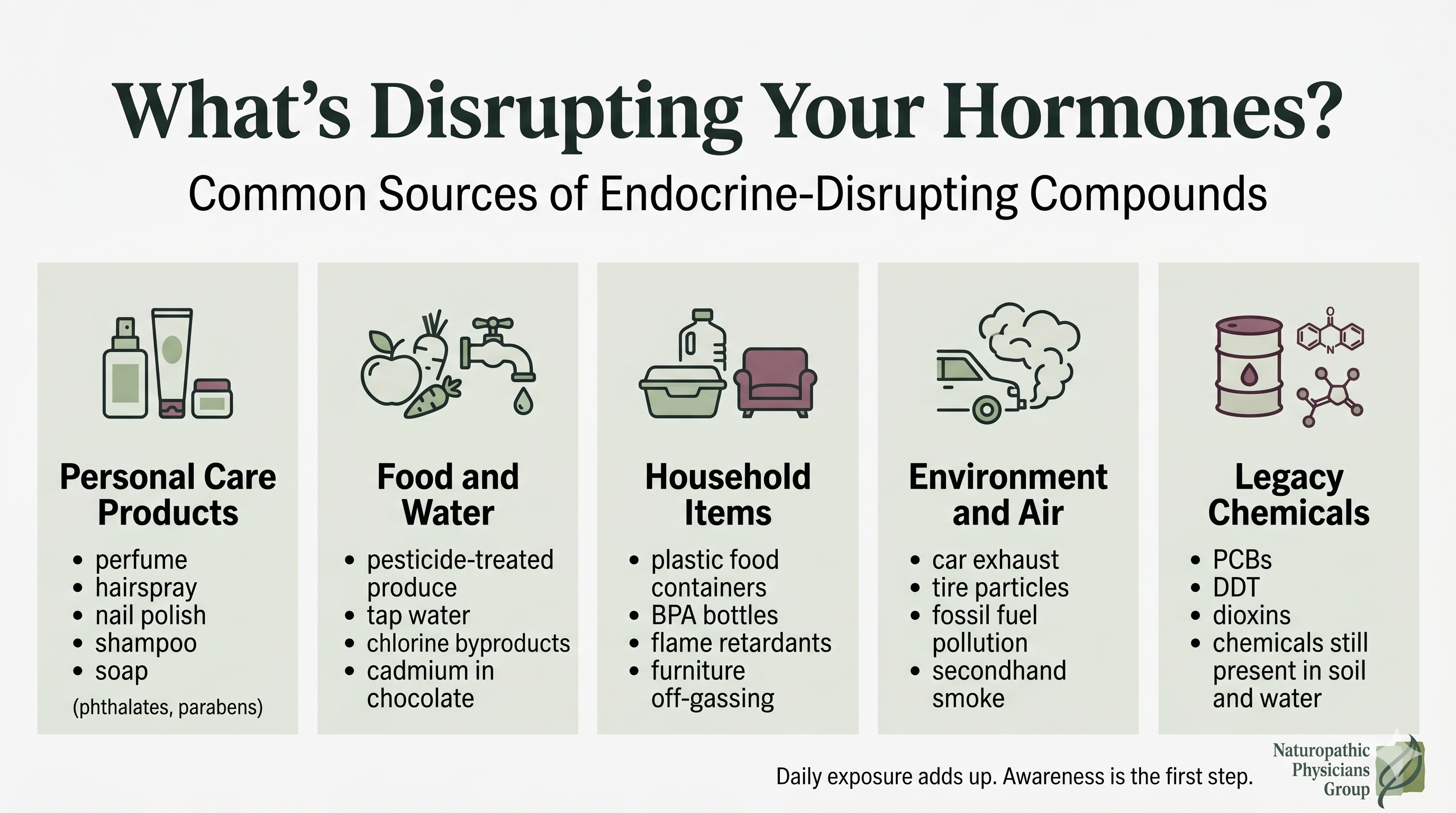
One of the most important things Dr. Katz and Dr. Ryder discuss in this episode is the role of endocrine-disrupting compounds, or EDCs, in PCOS. The definitive cause of PCOS is not fully established, but environmental pollutants are considered a contributing factor, and understanding them is genuinely useful for anyone managing or trying to prevent the condition.
The endocrine system is the network of glands and organs that governs hormone production. It controls metabolism, energy, reproduction, growth, mood, and many other functions. EDCs are chemicals that interfere with hormone signaling, and they clog the pathways that allow hormones to reach their destinations. Dr. Ryder offers a memorable way to think about it: plastics chemically resemble estrogen, and they act like squatters on your hormone receptors, taking up space and disrupting normal function.
Common sources of EDCs include:
Phthalates, found in hairsprays, perfumes, nail polish, soaps, shampoos, and detergents
Pesticides, fungicides, herbicides, and insecticides are sprayed on food
PCBs (polychlorinated biphenyls), used in fluorescent lighting, were banned in 1979 but are still present in the environment
DDT, an insecticide banned in 1972, that persists in soil and water
Plasticizers like phthalates, benzoates, and adipates, which make plastics more flexible
Dioxins, byproducts of pesticide manufacturing
PAHs (polyaromatic hydrocarbons), produced by burning coal, crude oil, and gasoline, and also formed during high-heat cooking
Flame retardants used in infant clothing and furniture
Parabens in cosmetics
BPA (bisphenol A) in plastic water bottles and food containers
Chlorine byproducts in tap water and shower water
Triclosan, an antibacterial compound formerly used in soaps and some toothpastes
Cadmium, found in secondhand smoke and present in some chocolate
Dr. Katz makes an important point about the longevity of these chemicals: being banned decades ago does not make them go away. Some have half-lives of 30 to 40 years, meaning they remain 50% potent for generations. Lead was banned from paint in 1978 and is still present in older homes and soil. These compounds accumulate in the body over time, and the burden they create can interfere with hormones in ways that are cumulative rather than immediate.
How PCOS Is Tested and Diagnosed
Standard testing for PCOS typically begins with hormone labs: testosterone, estrogen, and progesterone. As Dr. Ryder notes, PCOS is generally associated with normal estrogen and progesterone levels but elevated testosterone.
Sex hormone binding globulin (SHBG) should also be tested, as low levels are associated with insulin resistance.
Fasting insulin and fasting glucose are key markers as well, since high levels of both are linked to PCOS.
LH and FSH (luteinizing hormone and follicle-stimulating hormone) are signals from the brain to the ovaries, and elevated levels can indicate that the body is sounding the alarm hormonally.
A transvaginal ultrasound may be ordered to visualize the ovaries and check for cysts, though diagnosis does not depend on finding them.
Conventional treatments most commonly include:
Birth control pills to address hormonal irregularities
Metformin to address insulin resistance and blood sugar
Spironolactone as an anti-androgen to reduce hirsutism
Clomiphene to stimulate egg production for women trying to conceive
Statins in some cases for cholesterol management
Hair removal procedures for hirsutism as a symptom-focused intervention
In vitro fertilization for women with PCOS-related infertility
Dr. Katz raises an important and often overlooked point: birth control pills can reduce B12 absorption, and metformin can reduce folate absorption. Both B vitamins are essential for energy, brain health, and hormone metabolism. Many patients on these medications are never told to supplement or get their B vitamin levels checked, which can lead to downstream deficiencies that compound the original problem.
What Naturopathic Testing Looks Lik
A naturopathic evaluation for PCOS goes considerably deeper than a standard hormone panel. Dr. Katz explains that it is not enough to check estrogen, progesterone, and testosterone in isolation. You need to see how those hormones are breaking down, the precursors, the metabolites, and the byproducts. Understanding the full hormone pathway, including the adrenal glands, the sex hormones, and the stress hormones, is what makes it possible to treat the root cause rather than just suppress symptoms.
One testing option Dr. Ryder highlights is a 24-hour urine hormone test, which checks metabolites and provides a far more detailed picture of hormone activity than a single blood draw.
Methylation testing is another important piece. Dr. Katz notes that PCOS is strongly associated with methylation problems, particularly the MTHFR genetic mutation (methylenetetrahydrofolate reductase), which is present in approximately 60% of the population. When methylation is impaired, the body cannot properly break down B vitamins, which ties directly back to the nutrient depletions caused by birth control pills and metformin.
Heavy metal testing is also part of the naturopathic picture. Metals like lead, cadmium, aluminum, and arsenic are absorbed from everyday environmental exposure, breathing, drinking water, and eating, and they can impair both the methylation process and the body's detoxification pathways, which in turn affects hormone balance.
Natural Treatment Options for PCOS

Dr. Katz and Dr. Ryder emphasize that naturopathic treatment for PCOS is individualized. What follows is a summary of the approaches discussed in the episode.
This content is for educational purposes only and is not medical advice. Treatment decisions should be made with a qualified healthcare provider who understands your symptoms, history, labs, and goals.
Exercise
Reduces insulin resistance and obesity and supports healthy body function across the board.
IV Therapy for Detox
If the body is carrying a toxic burden, heavy metals, plastics, or accumulated chemicals, detox pathways need to be opened before real improvement is possible. Nutrient IV therapy with glutathione supports liver function and toxin clearance. Chelation therapy may be appropriate for a heavy metal burden.
Reducing Environmental Exposure
Use as little plastic as possible
Swap to glass or stainless steel containers
Do not microwave food in plastic or styrofoam
Filter tap water and shower water
Take shoes off at the door
Dust regularly, as endocrine-disrupting compounds travel in household dust
Eat organic when budget allows; use the Environmental Working Group's Clean 15 and Dirty Dozen guidelines to prioritize
Hydration
Drink approximately half your body weight in ounces of water per day to support the kidneys and lymphatic system in clearing toxins.
Detox Before Conceiving
For women trying to get pregnant, Dr. Katz recommends beginning the detox process, for both partners, at least a year before attempting conception. Research discussed in the episode suggests endocrine-disrupting compounds can affect sexual organ development across up to four generations of offspring.
Shower and Tap Water Filters
Aerosolized water is a significant source of EDC exposure. Most water treatment plants are not equipped to remove all pharmaceutical residues and chemical byproducts that have entered the water supply over the decades.
Supplements That May Support PCOS
The following supplements were discussed by Dr. Katz and Dr. Ryder in the context of PCOS management. These are not recommendations for self-treatment. A naturopathic evaluation is needed to determine which supplements are appropriate for your specific needs, labs, and health history.
This content is for educational purposes only and is not medical advice. Treatment decisions should be made with a qualified healthcare provider who understands your symptoms, history, labs, and goals.
B Vitamins
B9 (folate) supports detox pathways and blood sugar regulation. For those with the MTHFR mutation, methylfolate is the preferred form.
B6 (pyridoxine), ideally as pyridoxal 5'-phosphate in its activated form, may support glucose balance and mood regulation.
B12, ideally as methylcobalamin or adenosylcobalamin. Cyanocobalamin is the least effective form and the one most commonly used in cheap supplements.
Inositol
Sometimes referred to as vitamin B8, inositol is a sugar that helps the body process insulin. The myo-inositol form is considered more bioavailable. It plays a role in glycogen storage, glucose uptake, and FSH signaling. Dr. Katz also notes inositol is used in anxiety-support formulas for its calming effect on the nervous system.
Amino Acids
Glycine, taurine, methionine, and glutamine may help with inflammation, insulin sensitivity, and methylation support. Glutamine also supports digestive health, which is directly connected to overall inflammation in the body.
Minerals
Selenium may help decrease serum insulin levels and reduce oxidative stress.
Chromium supports blood sugar regulation and may reduce sugar cravings.
Calcium supports ovarian egg health.
Magnesium supports insulin function, acts as a muscle relaxant, and has anti-inflammatory properties. The form of magnesium matters. Magnesium is rapidly depleted by stress.
Zinc supports fat metabolism, insulin metabolism, and hormone metabolism.
Melatonin
Beyond sleep, melatonin may help the body clear BPA, offer blood sugar protection, and has shown anti-tumor properties in conventional research — particularly related to gut cancers at higher doses under clinical guidance.
Omega-3 Fatty Acids
Support metabolic and endocrine function. Found naturally in fatty fish, seeds, and nuts, and available as fish oil supplementation.
NAC (N-Acetylcysteine)
Supports glutathione production, which assists in detoxification, egg quality, and insulin receptor function.
Alpha-Lipoic Acid (ALA)
An antioxidant that may improve insulin resistance and support detoxification. Available as an IV treatment at Naturopathic Physicians Group and also as an oral supplement.
Probiotics
Support metabolic health, blood sugar regulation, and may help reduce testosterone biosynthesis. Gut health is directly tied to inflammation throughout the body.
Frequently Asked Questions About PCOS
Can you have PCOS without having ovarian cysts?
Yes. Despite the name, polycystic ovarian syndrome does not require the presence of cysts for a diagnosis. A diagnosis can be made when a patient has at least two of three criteria: irregular or infrequent periods, elevated androgens such as testosterone, and polycystic ovaries on imaging. If two of those criteria are present, such as elevated testosterone and irregular cycles, PCOS may be the diagnosis even without visible cysts on an ultrasound.
What is the connection between PCOS and diabetes?
PCOS is strongly associated with insulin resistance, a condition in which the muscles, fat, and liver do not respond properly to insulin. This can cause blood glucose to build up over time. Research discussed in the episode suggests that by age 40, approximately 40% of women with PCOS may develop pre-diabetes or type 2 diabetes. Early evaluation and intervention are important for this reason.
Why might birth control pills not be the best long-term answer for PCOS?
Birth control pills are one of the most common conventional treatments prescribed for PCOS, but they address symptoms rather than root causes. When the body receives synthetic hormones externally, it tends to reduce its own hormone production. When a patient stops taking birth control, symptoms often return because nothing underlying has changed. Oral contraceptives also deplete B12, and that depletion can have downstream effects on energy, brain health, and overall hormonal function.
What are endocrine-disrupting compounds, and why do they matter for PCOS?
Endocrine-disrupting compounds are environmental chemicals that interfere with hormone signaling in the body. They include plastics, pesticides, cleaning products, personal care products, flame retardants, and industrial byproducts. Because the endocrine system governs hormone production and communication, chemicals that disrupt it can throw off hormonal balance in ways that contribute to or worsen conditions like PCOS. Dr. Ryder describes plastic as acting like a squatter on hormone receptors, sitting there and blocking normal function without producing any useful signal.
How is naturopathic testing for PCOS different from standard bloodwork?
Standard labs for PCOS typically check a few hormones and possibly blood sugar markers. A naturopathic evaluation looks at the full hormone pathway, including how hormones are broken down, their precursors, and their metabolites. A 24-hour urine hormone test can show significantly more than a single blood draw. Methylation status, heavy metal levels, and MTHFR genetic variants are also evaluated, since all of these affect how the body processes hormones, B vitamins, and toxins.
Ready to take a closer look at what your body is telling you? Dr. Steven Katz and Dr. Loreena Ryder offer personalized, root-cause evaluations for patients who are tired of being told their labs look fine.
Schedule a consultation at https://naturopathicgroup.com/contact
Phone: (480) 451-6161
Email: [email protected]
Location:
Naturopathic Physicians Group,
9200 E. Raintree Dr., Suite 150, Scottsdale, AZ 85260
This content is for educational purposes only and is not medical advice. Treatment decisions should be made with a qualified healthcare provider who understands your symptoms, history, labs, and goals.