
The Real Reason Your Joints Hurt When There Is No Injury
You have never been in a car accident. You have never had a major fall or a sports injury. You have no trauma history that would explain what you are feeling.
And yet every single day, your joints ache. Your hips feel like they are shifting. Your shoulders feel loose. Your back gives out for no reason. You have seen doctors, had scans, and been told everything looks normal. But nothing feels normal.
At Naturopathic Physicians Group in Scottsdale, Dr. Steven Katz and Dr. Loreena Ryder see this pattern weekly. Patients arrive frustrated, confused, and often embarrassed to keep mentioning pain that nobody can explain. They are not imagining it. They are not exaggerating. They have a real structural problem that conventional medicine is not equipped to find or fix.
This conversation comes directly from a recent episode of Your Health Is Wealth, where Dr. Katz walked through the real reason so many people live with unexplained joint pain and what can actually be done about it.
What Is Connective Tissue and Why Does It Matter?
Key Takeaways
Unexplained joint pain with no trauma history is often caused by loose or weakened connective tissue.
Ehlers-Danlos Syndrome affects approximately 1 in 5,000 people and is frequently misdiagnosed or missed entirely.
Painkillers and steroid injections make ligament laxity worse over time, not better.
Collagen, vitamin C, and targeted nutrients can support connective tissue repair.
Regenerative injection therapies like prolotherapy and PRP are some of the most effective treatments for strengthening loose ligaments.
Connective tissue is the framework of your body. It holds everything together. Your ligaments connect bone to bone. Your tendons connect muscle to bone. Your skin, your blood vessel walls, your joints, your organs, all of them rely on a complex mixture of proteins, primarily collagen, to maintain their strength and elasticity.
When that connective tissue is healthy, your joints stay stable. They move through their normal range of motion and return to position. When the connective tissue is weak or compromised, everything shifts. Joints move too far. Ligaments stretch beyond where they should. The structures that are supposed to hold your body together stop doing their job.
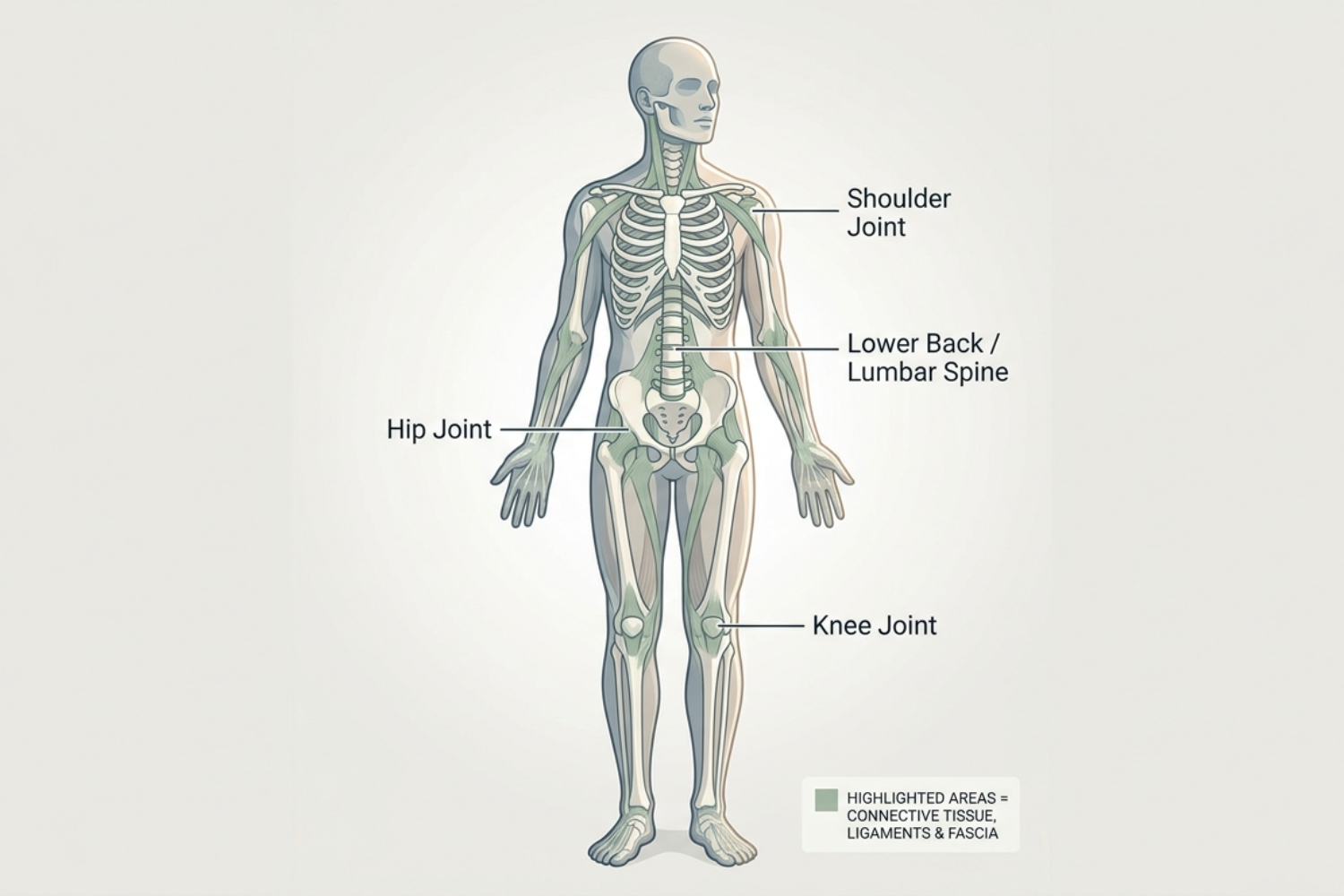
This is what Dr. Katz refers to as ligament laxity. Your ligaments are simply too loose to hold your joints in place the way they should. And the pain this creates is real, significant, and often completely invisible on standard imaging like X-rays, CT scans, and MRIs.
Why So Many People Go Undiagnosed
One of the most common conditions associated with loose connective tissue is called Ehlers-Danlos Syndrome, or EDS. It is a group of inherited disorders that affect the connective tissues throughout the body, primarily the skin, joints, and blood vessel walls.
Dr. Katz is direct about how often this condition is missed. EDS affects approximately 1 in 5,000 people, but the real number is likely much higher because so many cases go undiagnosed. Most conventional doctors receive very little training on EDS. Unless a physician actively treats it, they are unlikely to recognize it. That leaves a significant number of people walking around with a real structural condition and no answers.
The most common form is hypermobile EDS, which presents primarily as overly flexible joints, chronic pain, and tissue fragility.. Diagnosis relies almost entirely on physical examination and patient history, two things that are often rushed or skipped in a standard medical appointment.
What does EDS actually feel like? Dr. Katz describes it this way. Patients will be walking down the street and feel their hip just slide out. They will reach for something and feel their shoulder shift. They will wake up with pain that nobody can explain because there was no incident, no fall, no injury. Just a body that never quite feels stable.
If you have never been in an accident but feel like every joint in your body is slowly giving out, this may be what is happening to you.
The most common areas where people notice symptoms are the lower back, knees, shoulders, hips, and neck. But it can affect every joint in the body. And because the symptoms are so varied and the condition so underrecognized, patients often spend years cycling through specialists without ever getting a real answer.
What Conventional Medicine Gets Wrong
This is where the story gets frustrating for most patients.
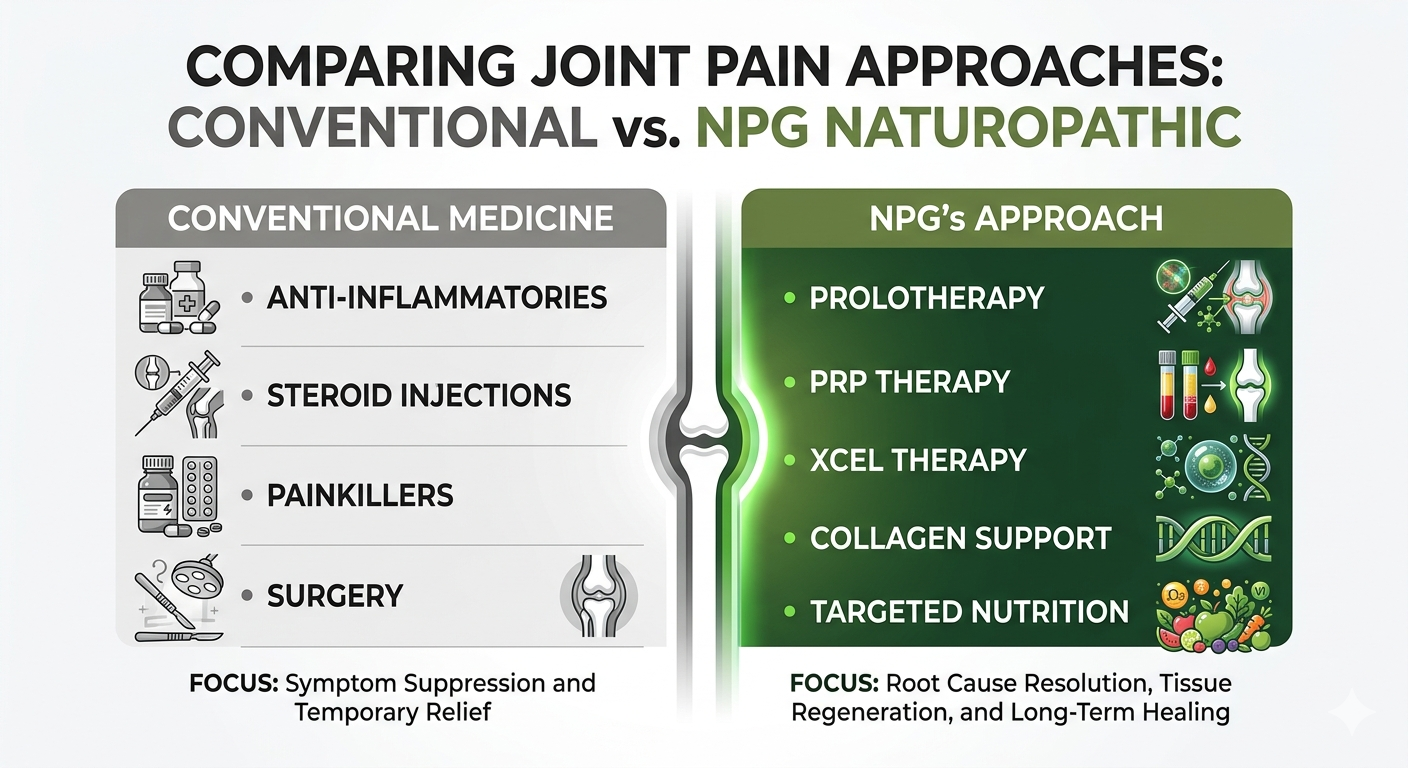
When someone with loose connective tissue or EDS walks into a conventional medical office, their primary complaint is pain. Pain is what gets treated. And the first-line treatments for pain, over-the-counter anti-inflammatories, prescription painkillers, and steroid injections, are exactly the wrong approach for this condition.
Anti-inflammatory medications like ibuprofen, naproxen, diclofenac, and aspirin slow your healing process. They are designed to suppress inflammation. But inflammation is your body's primary repair mechanism. When you suppress it chronically, you weaken the very tissues you are trying to protect. For someone with ligament laxity, taking anti-inflammatories every day does not manage the condition. It accelerates the damage.
Steroid injections are even more problematic. Dr. Katz explains that while a steroid injection will relieve pain in the short term, those strong anti-inflammatories weaken the immune system over time and ultimately make the injury worse. They are suppressing the flare without doing anything to address why the flare is happening.
Conventional imaging makes this worse. X-rays and MRIs are designed to show fractures, tears, and structural damage. They do not show weakness. They do not show laxity. So when a patient with EDS gets their scans back and is told everything looks normal, they are not lying. The scans genuinely look normal. But normal scans do not mean a normal body. They just mean the right question was never asked.
Surgery is sometimes recommended for joints that have been repeatedly damaged by dislocations. But surgery carries its own serious risks for EDS patients. Without adequate collagen, surgical wounds may not heal properly. Stitches can tear through fragile tissue. The outcome can leave the patient worse than before.
The result is a revolving door. Painkillers that plateau. Steroid injections that provide temporary relief and long-term damage. Scans that show nothing. Referrals that go nowhere. And a patient who is told, month after month, that what they are experiencing is normal.
It is not normal. It is undiagnosed and undertreated.
What Is Actually Causing Your Pain
Understanding ligament laxity and EDS means understanding collagen. Collagen is the primary structural protein in your connective tissue. It gives your ligaments their tensile strength, your skin its elasticity, and your blood vessels their integrity.
In people with EDS, the collagen is more fragile, more stretchy, and more vulnerable to damage than it should be. This is largely a genetic condition. The most common form of hypermobile EDS carries a 50% chance of being passed from a parent to a child. So if you have unexplained joint pain, it is worth asking whether anyone else in your family has struggled with similar symptoms.
But genetics are not the whole story. Dr. Katz points to several factors that can make the condition worse even in people who already have a genetic predisposition.
Heavy metal toxicity, particularly lead and mercury, affects collagen structures throughout the body. Heavy metals do not cause EDS, but they make the connective tissue issues significantly worse. Testing and treating heavy metal burden is part of NPG's standard workup for these patients.
Chronic inflammation from food sensitivities compounds the problem. Dr. Katz explains that 80% of your immune system originates in the digestive tract. If you are eating foods that trigger inflammation, that inflammation affects your entire body, including your connective tissue. He has seen patients whose joint pain dropped significantly simply from changing their diet, before any other treatment was introduced.
There is also a connection between an MTHFR gene mutation and hypermobile EDS. The MTHFR gene affects your body's ability to process folate, a natural form of vitamin B9. Preliminary research suggests this mutation may contribute to connective tissue hypermobility. Testing for MTHFR is a straightforward part of a comprehensive workup and can open up targeted treatment options.
Excess body weight places additional stress on already compromised ligaments and joints. Gravity and weight are not kind to loose connective tissue. Reducing inflammatory load through diet and supporting a healthy weight are both important parts of a complete treatment plan.
What NPG Does Differently
At Naturopathic Physicians Group, the approach starts with a thorough evaluation of the whole patient, not just the painful joint.
Dr. Katz and Dr. Ryder listen for specific patterns. When a patient says their hip feels loose when they walk, or their shoulder feels like it is shifting when they reach, or their back gives out for no reason, those are the signals that point toward connective tissue dysfunction. The physical examination assesses range of motion, tissue integrity, and joint stability in ways that imaging simply cannot replicate.
From there, testing may include food sensitivity panels, heavy metal testing, MTHFR genetic testing, and a full nutritional workup to identify deficiencies that are undermining connective tissue repair.
Treatment is built around the specific pattern of each patient. But there are several core approaches that Dr. Katz consistently returns to for connective tissue conditions.
Targeted Nutritional Support
The foundation of connective tissue repair starts with giving the body the raw materials it needs to rebuild.
Collagen is the most important supplement for anyone with ligament laxity or EDS. It is the building block of connective tissue and directly supports the strength of ligaments, tendons, and joints. Quality matters significantly. Dr. Katz recommends grass-fed organic collagen from beef sources or organic pasture-raised chicken collagen. Not all collagen products are created equal and the source affects both purity and effectiveness.
Vitamin C is essential for collagen synthesis. Your body cannot make collagen without it. It is also a natural anti-inflammatory, which makes it particularly valuable for connective tissue conditions where you want to support healing without suppressing it.
Biotin supports connective tissue production and offers an alternative for patients who prefer a non-animal-based option. It also supports nerve health, mood, energy, and cardiovascular function.
Vitamin D3 and K2 work together to support bone density and calcium regulation. Low vitamin D is extremely common in EDS patients and deficiency makes the condition harder to manage.
Glucosamine and Chondroitin support cartilage, ligament, and tendon health. Quality and absorption vary significantly between products. Dr. Katz recommends finding a high-quality formulation that crosses the blood brain barrier effectively. Patients with shellfish allergies should check labels carefully.
NAD supports mitochondrial function, which improves muscle function and helps stabilize loose connective tissue. It is available as a supplement but is significantly more potent in IV form. NPG offers IV NAD therapy for patients who need a deeper level of support.
Methylated Folate may be particularly important for patients with an MTHFR mutation. If the genetic component is contributing to connective tissue hypermobility, addressing folate metabolism directly can support tissue repair.
Curcumin and Turmeric are among the most well-researched natural anti-inflammatories available. Thousands of peer-reviewed studies support their role in reducing inflammation, supporting joint health, and protecting connective tissue without the side effects of pharmaceutical anti-inflammatories.
Boswellia and Ginger are additional botanical anti-inflammatories with strong evidence for reducing joint pain and stiffness associated with both osteoarthritis and rheumatoid arthritis.
Fish Oil provides omega-3 fatty acids that help balance the inflammatory ratio in the body. Dr. Katz recommends small, wild-caught fish sources to minimize chemical exposure.
Disclaimer: The discussion of these supplements is for educational purposes only. Please consult a medical professional who knows your personal history before starting any new therapies.
Regenerative Injection Therapies
This is where NPG's approach diverges most dramatically from conventional care, and where Dr. Katz sees the most significant results.
While conventional medicine uses steroid injections to suppress pain which can weaken tissue, regenerative injection therapies do the opposite. They stimulate the body's natural healing mechanisms to strengthen the tissue that is causing the problem.
Prolotherapy uses a dextrose solution, which is a form of sugar, injected directly into the weakened ligaments and tendons. The injection creates a controlled, short-term inflammatory response. The immune system recognizes this inflammation, sends a direct blood supply to the area, and initiates the healing process. New collagen is laid down. The ligament strengthens. The joint becomes more stable.
Dr. Katz describes it as guiding your immune system to exactly where it needs to go. For patients with EDS or ligament laxity, prolotherapy is not just pain relief. It is a structural repair.
Platelet-Rich Plasma therapy, or PRP, takes this a step further. Blood is drawn from the patient, processed to concentrate the healing platelets, and reinjected directly into the damaged tissue. Instead of signaling the immune system to send healing factors, PRP delivers those healing factors directly. It is a more potent treatment that bypasses the signaling step entirely.
Dr. Katz is clear about the results he has seen. Connective tissue heals remarkably well with PRP. For patients who feel like their hips are loose, their shoulders are shifting, or their back gives out for no reason, these treatments are game changers.
Disclaimer: The discussion of these therapies is for educational purposes only. Please consult a medical professional who knows your personal history before starting any new therapies.
What Life Looks Like When Your Joints Are Actually Stable
When the root cause of joint pain is identified and treated properly, the change is not just physical. It is a shift in how you move through the world.
Patients who have spent years bracing for the next dislocation, planning their days around their pain levels, and avoiding activities they used to love start to rebuild confidence in their own bodies. They walk without waiting for their hip to shift. They reach without expecting their shoulder to give. They sleep without waking up in pain from the movements they made in the night.
The isolation that comes with chronic unexplained pain begins to lift. Patients return to exercise, to social activities, to work without constant distraction. The emotional weight of being dismissed, of being told everything looks normal when nothing feels normal, starts to release when someone finally finds the answer.
Dr. Katz puts it simply. Your body was not failing you. It was missing the structural support it needed. Once that support is restored, the body responds.
Action Steps If Your Joints Hurt for No Clear Reason
Pay attention to the pattern of your pain. If your joints feel loose, shifting, or unstable rather than simply sore, that is important information. Write it down and bring it to your next appointment.
Ask about food allergy/sensitivity testing. Chronic inflammation from food allergy/sensitivities makes connective tissue conditions significantly worse. A comprehensive panel can identify your specific triggers.
Start with collagen. If you have no known sensitivity to animal products, a high-quality grass-fed collagen supplement is the single most important nutritional step for connective tissue support.
Add vitamin C. Your body cannot produce collagen without it. It also supports healing without suppressing inflammation the way pharmaceutical anti-inflammatories do.
Request heavy metal testing. Lead and mercury toxicity compounds connective tissue problems, and is routinely missed in standard workups.
Ask about MTHFR testing. If there is a genetic component to your connective tissue issues, knowing your MTHFR status can open up targeted treatment options, including methylated folate supplementation.
Seek a practitioner who understands regenerative injection therapies. Prolotherapy and PRP are the most effective treatments available for loose ligaments. If your current provider only offers painkillers and steroid injections, you are not getting the full picture.
This information is educational and not a substitute for professional medical advice. Always consult your healthcare provider before making major health changes.
Take the Next Step
If you have been living with joint pain that nobody can explain, you do not have to keep accepting that as your reality. Dr. Steven Katz and Dr. Loreena Ryder at Naturopathic Physicians Group take the time to actually listen, to examine, and to investigate what is driving your pain at the structural level.
You deserve more than a prescription for the pain. You deserve to know what is causing it.
Schedule your consultation at naturopathicgroup.com/contact
Phone: (480) 451-6161
Email: [email protected]
Location: Naturopathic Physicians Group, Scottsdale, Arizona
Telephone and virtual consultations are available.
Frequently Asked Questions
What is ligament laxity and how does it cause joint pain?
Ligament laxity means your ligaments are too loose to hold your joints in their proper position. Ligaments connect bone to bone and provide structural stability. When they are weakened or overly flexible, joints can move beyond their normal range, creating instability, pain, and a feeling of things shifting or slipping. The pain is real and structural, even when imaging looks normal.
What is Ehlers-Danlos Syndrome and how common is it?
Ehlers-Danlos Syndrome is a group of inherited disorders that affect connective tissue throughout the body. It primarily impacts the skin, joints, and blood vessel walls. The most common form, hypermobile EDS, presents as overly flexible joints, chronic pain, and fragile skin. It affects approximately 1 in 5,000 people, though Dr. Katz believes the true number is higher due to widespread underdiagnosis.
Why do anti-inflammatories and steroid injections make this condition worse?
Anti-inflammatory medications and steroid injections suppress the body's inflammatory response. Inflammation is your primary healing mechanism. Chronically suppressing it weakens ligaments and tendons over time rather than repairing them. For patients with EDS or ligament laxity, these treatments provide short-term pain relief at the cost of long-term structural deterioration.
What is prolotherapy and how does it help loose ligaments?
Prolotherapy involves injecting a dextrose solution directly into weakened ligaments and tendons. The injection creates a short-term inflammatory response that signals the immune system to send a direct blood supply to the area and initiate repair. New collagen is produced and the ligament becomes stronger and more stable over time. It is the opposite of a steroid injection in both mechanism and outcome.
What is PRP therapy and how is it different from prolotherapy?
Platelet-rich plasma therapy draws blood from the patient, processes it to concentrate the healing platelets, and reinjects those platelets directly into the damaged tissue. Rather than signaling the immune system to send healing factors, PRP delivers those factors directly to the site. It is a more potent treatment than prolotherapy and is particularly effective for patients with significant connective tissue damage.
Can diet really affect joint pain and connective tissue?
Yes. Chronic inflammation from food sensitivities compounds connective tissue problems significantly. Dr. Katz has seen patients whose joint pain decreased substantially from dietary changes alone, before any other treatment. Because 80% of the immune system originates in the digestive tract, what you eat directly affects your body's capacity to repair and maintain connective tissue.
Is EDS genetic and can it be passed to children?
The most common form of EDS, hypermobile EDS, has a 50% chance of being passed from a parent to a child. If you have unexplained joint pain, it is worth asking whether other family members experience similar symptoms.
Are regenerative injection therapies safe?
Prolotherapy and PRP use your body's own healing mechanisms rather than introducing foreign substances. Prolotherapy uses a dextrose solution. PRP uses your own blood. Both are considered low-risk procedures when performed by an experienced practitioner. As with any medical procedure, individual evaluation is required to determine whether these therapies are appropriate for your specific condition.
What causes joint pain with no injury or trauma history?
Joint pain without a history of injury or trauma is often caused by connective tissue dysfunction, specifically ligament laxity, where the ligaments are too loose to hold joints in their proper position. According to Dr. Steven Katz of Naturopathic Physicians Group in Scottsdale, Arizona, this pattern is frequently associated with a condition called Ehlers-Danlos Syndrome, which affects collagen production and connective tissue integrity throughout the body. Standard imaging like X-rays and MRIs does not detect ligament weakness, which is why many patients receive normal scan results despite significant ongoing pain. Regenerative treatments such as prolotherapy and platelet-rich plasma therapy may help stimulate connective tissue repair, while nutritional support including collagen and vitamin C can help address the underlying structural deficiency.