What Your Doctor Won’t Tell You About Nerve Pain & Numbness
TLDR
Peripheral neuropathy affects up to 20 million Americans and is frequently treated with symptom-masking drugs. Dr. Katz and Dr. Ryder explain the real causes, including diabetes, heavy metal toxicity, nutritional deficiencies, and nerve compression. They also walk through naturopathic treatments that support nerve repair instead of simply dulling pain.
You have described it a hundred different ways. A burning sensation in your feet. Constant tingling in your fingers. The feeling that someone is grabbing your arm even when no one is there. And every time you bring it up, you leave your doctor's office with a prescription and no real answers.
Peripheral neuropathy affects more than 20 million Americans, and nearly half of people with diabetes eventually develop it. At Naturopathic Physicians Group in Scottsdale, Dr. Steven Katz and Dr. Loreena Ryder hear this story regularly. Patients arrive frustrated and confused after being told their peripheral neuropathy is a normal part of aging or an inevitable consequence of diabetes.
They are often prescribed Gabapentin or told to take ibuprofen long-term, then sent home. These medications may help manage symptoms in some patients. However, they do not address the underlying cause of nerve damage.
This conversation is about what peripheral neuropathy actually is, why conventional medicine often fails to resolve it, and what a naturopathic approach can do that standard care often does not.
What Causes Peripheral Neuropathy, and Can It Be Treated Naturally?
Peripheral neuropathy occurs when nerves in the body's extremities are damaged, producing symptoms like numbness, tingling, burning, and stabbing pain. According to Dr. Steven Katz and Dr. Loreena Ryder of Naturopathic Physicians Group in Scottsdale, Arizona, the most common causes include diabetic damage, heavy metal toxicity, nutritional deficiencies including B vitamins, autoimmune diseases, and nerve compression.
Natural options may include IV therapies such as alpha-lipoic acid infusions, targeted supplementation, prolotherapy, PRP, shockwave therapy, food sensitivity testing, and dietary modification to reduce systemic inflammation and treat the causation.
Key Takeaways
Peripheral neuropathy affects 1 in 10 people over age 50, or nearly 20 million Americans.
Gabapentin, opiates, and antidepressants may reduce symptoms but do not treat the cause.
Diabetes is the most common contributor, affecting nearly half of all diabetics.
Heavy metal toxicity, especially mercury, lead, and aluminum, can damage nerves and is often overlooked.
B vitamins are essential for nerve health and are commonly deficient.
IV therapies, particularly alpha-lipoic acid and phosphatidylcholine, can support nerve repair more effectively than oral supplements alone.
Food sensitivities, especially gluten and dairy can contribute to inflammation that worsens nerve damage.
Doctor Insight
"Peripheral neuropathy is often treated as a mystery condition. In reality, it almost always has identifiable drivers, whether metabolic, structural, toxic, or nutritional. When you identify the cause, treatment becomes far more effective."
Dr. Steven Katz
What Peripheral Neuropathy Actually Is
The word neuropathy simply means nerve damage. Peripheral neuropathy refers to damage in the body's extremities, including the arms, hands, legs, and feet. When a nerve is damaged, the signals it carries are disrupted, and the effects can range from mildly annoying to medically dangerous.
There are three main categories of nerves that can be affected.
Motor Nerves
Motor nerves control muscle movement. Damage here can produce weakness, difficulty gripping objects, or changes in how you walk.
Autonomic Nerves
Autonomic nerves regulate functions like blood pressure, breathing, bladder control, digestion, and sweating. Damage here can contribute to blood pressure instability, digestive problems, incontinence, and temperature regulation issues.
Sensory Nerves
Sensory nerves carry signals for pain, temperature, touch, and pressure. This is the category most people associate with neuropathy, producing burning, stabbing, tingling, and numbness.
Pain is often what finally brings patients in. Many people notice numbness first and assume it is part of aging. When the pain starts, that is usually when the alarm goes off. By that point, nerve damage may have been progressing for some time.
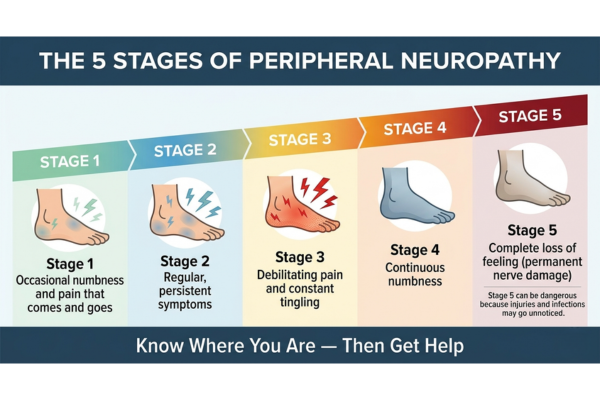
There are five stages. Stage one involves numbness and pain that comes and goes. Stage two brings regular, persistent symptoms. Stage three is debilitating pain and constant tingling. Stage four is continuous numbness. Stage five is complete loss of feeling, with permanent nerve damage.
Stage five is dangerous because patients cannot feel infections, wounds, or injuries on their extremities. What starts as something minor, like a blister or infected nail, can progress to a serious infection without warning.
What Is Peripheral Neuropathy?
Peripheral neuropathy is nerve damage in the body's extremities that can cause numbness, tingling, burning pain, weakness, and loss of coordination. It affects up to 20 million Americans and is most commonly associated with diabetes, though it can also be caused by nutritional deficiencies, heavy metal toxicity, autoimmune disease, and nerve compression.
Why Conventional Medicine Gets This Wrong
When you go to a primary care doctor or neurologist with numbness and tingling, the visit often follows a predictable path. Basic bloodwork may be ordered. A nerve conduction study or EMG may follow. If neuropathy is confirmed, Gabapentin or Lyrica is often prescribed.
Gabapentin is an anti-epileptic medication that works by dampening nerve signals. It does not heal damaged nerves or address why the nerves were damaged in the first place. It reduces the intensity of the pain signal. Long-term use is associated with depression and anxiety in some patients. Because it affects nerve pathways, stopping suddenly can cause symptoms to flare or feel different than before.
These medications may help manage symptoms in some patients. However, they do not address the underlying cause of nerve damage.
Antidepressants like Amitriptyline and Cymbalta may also be prescribed because they calm nerve signaling. Again, the root cause is not being addressed.
In more severe cases, opiates such as hydrocodone or oxycodone may be used. These carry serious risks, including addiction and constipation, and they do not repair nerve tissue.
Anti-inflammatories like ibuprofen and Celebrex are sometimes recommended as a first step. Long-term use can be hard on the gut and kidneys and does not repair nerve tissue.
Across these approaches, the pattern is similar. A medication reduces the symptoms, then the patient is sent home. The neuropathy progresses, and the question of why the nerves are damaged is often not fully investigated.
What Dr. Katz and Dr. Ryder Do Differently
The naturopathic approach starts with a different question. Before treatment is recommended, the goal is to understand what is causing the nerve damage. That often requires testing conventional medicine skips and a willingness to look at the full picture of a patient's health.
The Real Causes of Peripheral Neuropathy
Peripheral neuropathy is not a single disease with a single cause. It is a symptom. Understanding what is driving it is what makes treatment effective.
Diabetes and Blood Sugar Dysregulation
This is the most common cause. Nearly half of all people with diabetes develop some form of peripheral neuropathy. Chronically elevated blood sugar damages the small blood vessels that supply nerves with oxygen and nutrients. Without adequate supply, nerves deteriorate. Treating blood sugar dysregulation is essential in a naturopathic approach.
Heavy Metal Toxicity
Lead, mercury, and aluminum are linked to nerve damage. Mercury and aluminum are associated with central nervous system impacts that affect the entire nervous system. People born before 1978 were exposed to lead paint in many environments. Mercury amalgam dental fillings can be an ongoing source of exposure.
Chelation therapy binds to heavy metals and supports their removal. This does not resolve neuropathy overnight, but it can stop ongoing damage and create better conditions for healing.
Nutritional Deficiencies, Especially B Vitamins
B vitamins are essential for nerve health and are frequently deficient. Alcohol can deplete B vitamins. Some drugs such as Metformin can contribute to B12 depletion. A poor diet can deplete multiple B vitamins at once. Alcohol can also create B vitamin deficencies.
Dr. Ryder emphasizes that taking a single B vitamin in isolation is often incomplete. B vitamins work synergistically, and supplementing one without a B complex can create imbalances. A quality methylated B complex is often foundational.
Structural Nerve Compression
Not all neuropathy is systemic. Sometimes a nerve is physically compressed by a weak joint, damaged ligament, or poor alignment. When that is the cause, supplementation alone will not resolve the issue. The structural problem has to be addressed.
Dr. Katz shares a personal example. After being rear-ended, he developed numbness and locking in his right hand. After PRP treatments, the locking decreased by 75 percent after the first session and resolved completely after the third.
Autoimmune Disease, Infections, and Other Causes
Autoimmune conditions are a significant and frequently missed driver of peripheral neuropathy. Lupus, Sjogren's syndrome, rheumatoid arthritis, and Guillain-Barre syndrome are all associated with nerve damage. In these conditions, the immune system attacks healthy tissue, including nerve tissue, and the resulting inflammation disrupts normal nerve function.
Infections are another underrecognized cause. Lyme disease, shingles, Epstein-Barr virus, and HIV can all lead to neuropathy. These infections can damage nerves directly or trigger inflammatory responses that affect nerve signaling long after the initial infection has resolved. Many patients who develop neuropathy after a viral illness never connect the two events because their doctors never asked.
Chemotherapy is a well-documented cause in cancer survivors. The drugs used to destroy cancer cells can also damage peripheral nerves, leaving patients with lasting numbness, tingling, and pain that continues long after treatment ends. This is sometimes called chemotherapy-induced peripheral neuropathy.
Excess weight increases physical compression on nerve structures throughout the body. Metabolic syndrome, the combination of high blood pressure, high cholesterol, and elevated blood sugar, creates the chronic inflammatory and vascular conditions that accelerate nerve damage. Stress and cold weather do not cause neuropathy, but both reduce blood flow to the extremities, which worsens symptoms. Caffeine constricts blood vessels and reduces oxygen delivery to peripheral nerves, making existing neuropathy worse. This is something the Dr’s at Naturopathic Physicians Group raises directly with patients, and something most prescribing doctors never mention.
The NPG Treatment Approach
Treatment begins with comprehensive testing. Food sensitivity panels, heavy metal testing, nutrient panels including B vitamins and vitamin D, metabolic panels, fasting insulin, and hemoglobin A1C are part of the picture. Structural assessment of nerve root areas is included.
What follows is a personalized protocol based on what is actually causing nerve damage, not just what produces symptoms.
IV Therapies
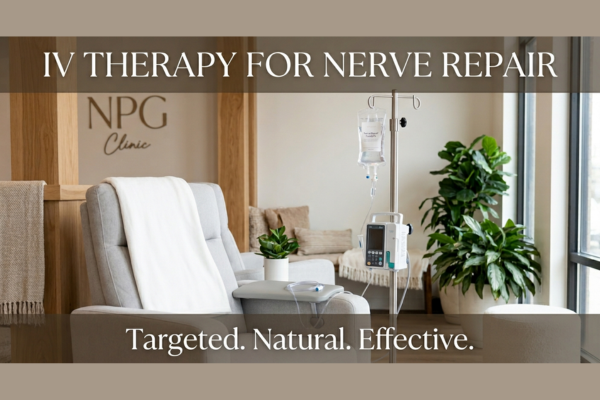
IV therapy bypasses the digestive system entirely, which matters enormously for neuropathy patients. Many people with neuropathy have underlying digestive dysfunction, diabetes-related absorption issues, or years of nutritional depletion that oral supplements simply cannot correct fast enough. Delivering nutrients directly into the bloodstream allows therapeutic concentrations that are impossible to achieve by mouth.
Neurological IV
A customized infusion built around each patient's specific deficiencies. This typically includes B vitamins, vitamin C, and other nutrients identified through testing as depleted. Rather than guessing at what the body needs, the neurological IV is designed around what testing actually shows.
Alpha-Lipoic Acid, ALA, IV
Dr. Ryder identifies alpha-lipoic acid as one of the most consistently effective tools in her neuropathy protocols. ALA is a powerful antioxidant that protects nerve tissue from oxidative damage and supports blood sugar regulation, addressing two of the most common drivers of neuropathy at the same time. Oral ALA supplementation provides benefit, but the doses achievable through IV infusion are significantly higher and reach nerve tissue more directly. Dr. Ryder has seen strong outcomes with ALA IV across a wide range of neuropathy patients, including those who had not responded well to conventional treatment.
Chelation IV
When heavy metal testing identifies lead, mercury, or aluminum as a potential contributor to nerve damage, chelation therapy is the treatment that removes them. Chelation works by binding heavy metals contained in the tissues and supporting their excretion via the urinary tract. This does not produce overnight results, but it stops the ongoing damage those metals are causing, which is a prerequisite for meaningful healing.
Phosphatidylcholine (PPC) IV
Phosphatidylcholine supports the integrity of the nerve membrane, insulating and protecting neurons from further damage. It is also used for broader neurological support and brain health. Dr. Katz and Dr Ryder consider it a strong option for nerve damage cases, particularly when patients are dealing with cognitive symptoms alongside peripheral neuropathy.
Learn more about Understanding IV Therapy and Its Benefits here.
Disclaimer: The discussion of these therapies is for educational purposes only. Please consult a medical professional who knows your personal history before starting any new therapies.
Prolotherapy and PRP
When neuropathy is caused by or worsened by structural nerve compression, prolotherapy and PRP are key tools that support repair of connective tissue so joints become more stable and nerves experience less compression.
Unlike steroid injections that suppress inflammation and can weaken tissue over time, prolotherapy and PRP stimulate a healing response that supports repair. As stability improves, symptoms can improve because the structural contributor is addressed.
Learn more about regenerative injection therapies such as prolotherapy and PRP here.
Disclaimer: The discussion of these therapies is for educational purposes only. Please consult a medical professional who knows your personal history before starting any new therapies.
Focused Shockwave Therapy
This is a non-invasive option that can support blood flow and stimulate repair pathways without needles. It can also be used for conditions such as erectile dysfunction, which can have a significant nerve component.
Spinal Manipulation
Chiropractic adjustments can reduce nerve root compression and provide relief. However, without structural stability, results may not hold. Dr. Ryder endorses combining spinal manipulation with prolotherapy or PRP when instability is present. The injections rebuild the stability that allows adjustments to last.
Targeted Supplements
The following supplements are commonly used in NPG neuropathy protocols. Individual needs vary based on testing results, and Dr. Katz and Dr. Ryder assess each patient individually before making recommendations.
Alpha-Lipoic Acid, Oral
Protects nerve tissue from oxidative damage and supports blood sugar regulation. A useful complement to IV ALA between infusions.
GABA
The natural neurotransmitter version of what Gabapentin artificially mimics. GABA runs the same nerve-calming pathways as the prescription drug but much less dependency risk or side effects profile. It can reduce overactive nerve signals that cause pain and tingling.
Methylated B Complex
As the Dr’s explain, B vitamins taken as a complex have a more meaningful impact when needed.
B1 reduces nerve pain and inflammation and is especially depleted by alcohol.
B3 protects nerve tissue.
B6 maintains the myelin sheath that insulates nerves and allows signals to travel correctly.
B7, aka biotin is neuroprotective for tendons, ligaments, and joints.
B12 addresses tingling sensations and supports energy production.
Taking a single B in isolation creates imbalances. A quality B complex may be foundational for many patients.
Magnesium
Multiple studies support magnesium for calming overactive nerves. It relaxes smooth muscle tissue, which includes both the nervous system and the digestive tract. Many patients are deficient. Quality and the form of magnesium matters. Magnesium citrate in high doses causes loose stools, so the right form needs to be selected based on the patient's needs and if it will be targeting the nervous system.
Panax Ginseng
Supports insulin sensitivity and blood sugar regulation. Used not as a standalone neuropathy fix, but as an adjunct that addresses the metabolic drivers of nerve damage while also supporting brain and nervous system function.
Vitamin D
Deficiency is widespread and commonly linked to pain and nerve symptoms. Testing is required to determine whether supplementation is needed and at what dose.
Cayenne Pepper / Capsaicin
Used both topically and in supplement form to modulate pain signaling. Capsaicin is already found in over-the-counter nerve pain creams for good reason. It works on the same signaling pathways that produce neuropathic pain.
Melatonin
A naturally occurring hormone that reduces oxidative stress and decreases the inflammatory processes that drive neuropathic damage. It also supports sleep and digestion, both of which are frequently disrupted in neuropathy patients. This one, due to how it affects sleep, should only be taken at bedtime.
Curcumin and Fish Oil
Natural anti-inflammatories that support overall nerve health and reduce the systemic inflammation that sustains nerve damage. Fish oil quality matters significantly. Dr. Katz recommends small fish, wild-caught, omega-3 based formulations. Low-quality fish oil does not produce the same results.
Disclaimer: The discussion of these supplements is for educational purposes only. Please consult a medical professional who knows your personal history before starting any new therapies.
Lifestyle Factors That Matter
Treating the root cause also means changing the conditions that are sustaining the damage. Lifestyle is not secondary to treatment. It is part of the treatment.
Some daily habits may be making pain and inflammation worse without you realizing it. For more on that connection, read our related blog, Healthy Habits That May Be Making Your Pain Worse.
Diet
Diet is foundational. Food sensitivity testing at NPG consistently identifies gluten and dairy as the some of the most common inflammatory triggers in neuropathy patients. Eighty percent of immune system activity and much of the body's inflammatory burden originates with what we eat. Eliminating the specific foods that are triggering an immune response reduces systemic inflammation, which directly affects nerve tissue.
Diets high in sugar and processed carbohydrates feed the metabolic conditions, including diabetes, metabolic syndrome, and candida overgrowth, that drive neuropathy directly.
Weight Loss
For patients who are carrying excess weight, this is not cosmetic advice. Every pound of excess weight increases compression on nerve structures throughout the body. Dr. Katz is direct with patients about this and also compassionate. He sees patients lose 25 pounds and become discouraged because they need to lose 75. His message is consistent. Celebrate the 25, and keep going.
Hydration
Hydration is more important than most neuropathy patients realize. Water increases oxygen delivery to nerves and improves blood flow to the extremities. Drinking approximately half your ideal body weight in ounces per day, assuming healthy kidney function, is a practical starting point.
Many patients with neuropathy intentionally restrict fluids because they are managing urgency or incontinence. However, dehydration concentrates the body's waste products and worsens nerve irritation. For patients who genuinely struggle to drink plain water, water-dense foods like cucumbers and watermelon can help supplement intake.
Exercise and Daily Habits
Exercise maintains muscle integrity, keeps oxygen moving through the body, and directly supports peripheral nerve health. Movement does not have to be intense to be effective. The goal is consistent blood flow and muscle engagement.
Warm baths with lavender or frankincense essential oils can provide topical relief for nerve symptoms. Quitting smoking improves vascular function and blood delivery to the extremities.
For patients whose neuropathy is alcohol-related, Dr. Katz is unambiguous. If alcohol use has progressed to the point of causing neuropathy, it has already done serious systemic damage. Addressing the neuropathy while continuing to drink is not realistic.
What Happens If You Do Nothing
Neuropathy does not plateau on its own. Without identifying and addressing the cause, nerve damage continues to accumulate, progressing through the five stages toward permanent loss of sensation. What begins as occasional tingling becomes persistent pain. Persistent pain becomes constant numbness. Constant numbness becomes complete loss of feeling. At that point, the damage may no longer be reversible.
At stage five, ordinary injuries become medical emergencies. A blister on the bottom of the foot. An infected toenail. A small cut that goes unnoticed. Without the ability to feel pain, patients ignore injuries that healthy nerves would immediately flag. In diabetic patients especially, this progression is well documented and devastating. Undetected foot wounds lead to ulcers, ulcers lead to infections, and infections that won’t heal or are caught too late lead to amputations.
The emotional and social cost compounds steadily over time. People reduce activity because pain or instability makes movement feel unsafe. They stop exercising. They withdraw from social situations that require sustained standing, walking, or travel. The isolation feeds depression and anxiety, which increases stress, which reduces blood flow to the extremities, which makes the neuropathy worse.
Physical decline follows. Reduced movement leads to muscle loss. Muscle loss worsens joint stability. Worsening joint stability increases nerve compression. Meanwhile, the metabolic factors driving the neuropathy continue unchecked because the patient is less active and often less motivated to manage diet and lifestyle. Conventional management may keep the symptoms quiet enough to tolerate, but it does not interrupt progression. Naturopathic care aims to break the cycle by finding and fixing what started it.
What Life Looks Like When the Nerves Start Healing
Patients who address root causes describe improvement in terms of what they can do again. Walking with more confidence. Holding objects without misjudging grip. Driving without numbness spreading. Sleeping better because symptoms are less disruptive.
Many patients report improved sensation, reduced burning pain, and restored mobility after the underlying cause of neuropathy is addressed.
Dr. Katz describes his experience directly. After the car accident, he had neuropathy in the hand he relies on professionally. After three PRP treatments, the issue was resolved completely. As he puts it, these are treatments they use personally, not just recommend.
Beyond symptom relief, patients often report a shift in confidence and understanding. They know what caused the problem and what to do to reduce the chance of recurrence.
Action Steps If Neuropathy Keeps Getting Worse
Get comprehensive bloodwork, including A1C and nutrient testing.
Request food sensitivity testing.
Review medications with a qualified provider.
Reduce caffeine and alcohol.
Start a quality methylated B complex as appropriate.
Increase water intake as appropriate for kidney function.
Move your body in ways your current mobility allows.
This information is educational and not a substitute for professional medical advice. Always consult your healthcare provider before making major health changes.
Take the Next Step
If you are ready to stop accepting numbness, tingling, and nerve pain as inevitable, Naturopathic Physicians Group is here to help. Dr. Steven Katz and Dr. Loreena Ryder assess the cause of neuropathy and build treatment plans based on what your body needs.
Schedule your consultation: https://naturopathicgroup.com/contact
Phone: (480) 451-6161
Email: [email protected]
Location: Naturopathic Physicians Group, Scottsdale, Arizona
Frequently Asked Questions
Can peripheral neuropathy affect both hands and feet at the same time?
Yes. Peripheral neuropathy often begins in the feet and later affects the hands, especially when the cause is systemic, such as blood sugar imbalance, nutritional deficiency, or toxin exposure. This pattern is common because the longest nerves in the body are usually affected first.
Is peripheral neuropathy always related to diabetes?
No. Diabetes is one of the most common causes, but it is not the only one. Peripheral neuropathy may also be associated with nutritional deficiencies, heavy metal exposure, autoimmune conditions, infections, chemotherapy, alcohol use, or nerve compression.
Why does neuropathy often feel worse at night?
Many people notice neuropathy symptoms more at night because there are fewer distractions and the nervous system becomes more aware of abnormal sensations. Reduced movement, changes in circulation, and increased awareness during rest can all make tingling, burning, and discomfort feel more intense.
Can peripheral neuropathy affect balance and coordination?
Yes. When the nerves in the feet and legs are damaged, it can become harder to sense the ground properly or react quickly to changes in movement. This may increase the risk of stumbling, instability, or falls.
Are numbness and tingling ever a sign of something urgent?
They can be. Sudden numbness, rapidly worsening weakness, loss of bladder or bowel control, facial drooping, or symptoms affecting only one side of the body should be evaluated right away. These symptoms may point to a more serious medical issue and should not be ignored.
Can lifestyle habits make neuropathy worse even if they did not cause it?
Yes. Poor blood sugar control, dehydration, smoking, lack of movement, and ongoing alcohol use can all make symptoms worse or make healing more difficult. Even when they are not the original cause, they can still affect how severe neuropathy becomes.
Does nerve pain mean the nerves are healing, or getting worse?
Not necessarily. Nerve pain can happen for different reasons. In some cases, it reflects ongoing irritation or damage. In others, changing sensations may occur as nerve function shifts. Because symptoms alone do not tell the full story, proper evaluation is important.
What kind of doctor should evaluate ongoing numbness and tingling?
That depends on the suspected cause. A primary care provider may begin the workup, but some patients also benefit from evaluation by a neurologist, functional or naturopathic provider, or another clinician trained to investigate metabolic, structural, or inflammatory contributors.