
Inflammation Is a Healing Signal: Why Your Pain Is Not Going Away
TLDR: Chronic pain often continues because inflammation is repeatedly suppressed instead of the structural cause being repaired. But inflammation alone is not always the full story. 80% of inflammation begins in the digestive tract. What you eat, how you manage stress, and the chemicals you are exposed to every day may be driving your pain more than any structural damage. Regenerative therapies such as prolotherapy and PRP stimulate healing from the inside out rather than simply blocking symptoms.
You have tried everything. You cut out caffeine. You iced your joints. You took the anti-inflammatories your doctor prescribed. You even did the cortisone shots.
And the pain keeps coming back.
At Naturopathic Physicians Group in Scottsdale, Arizona, Dr. Steven Katz and Dr. Loreena Ryder hear this story every single week. Patients arrive at the clinic having spent years, sometimes decades, suppressing inflammation without anyone ever asking what was causing it in the first place.
Here is the uncomfortable truth Dr. Katz delivers to patients directly: "If you are eating wrong and you know it is wrong, then the answer is obvious. You are part of the problem." That is not a judgment. That is an invitation to finally do something about it.
This episode of Your Health Is Wealth is about accountability, root causes, and why so many patients spend years managing symptoms without anyone ever investigating what is actually driving them.
What Is Chronic Inflammation and Why Does Pain Persist?
Inflammation is not a disease. It is a repair signal.
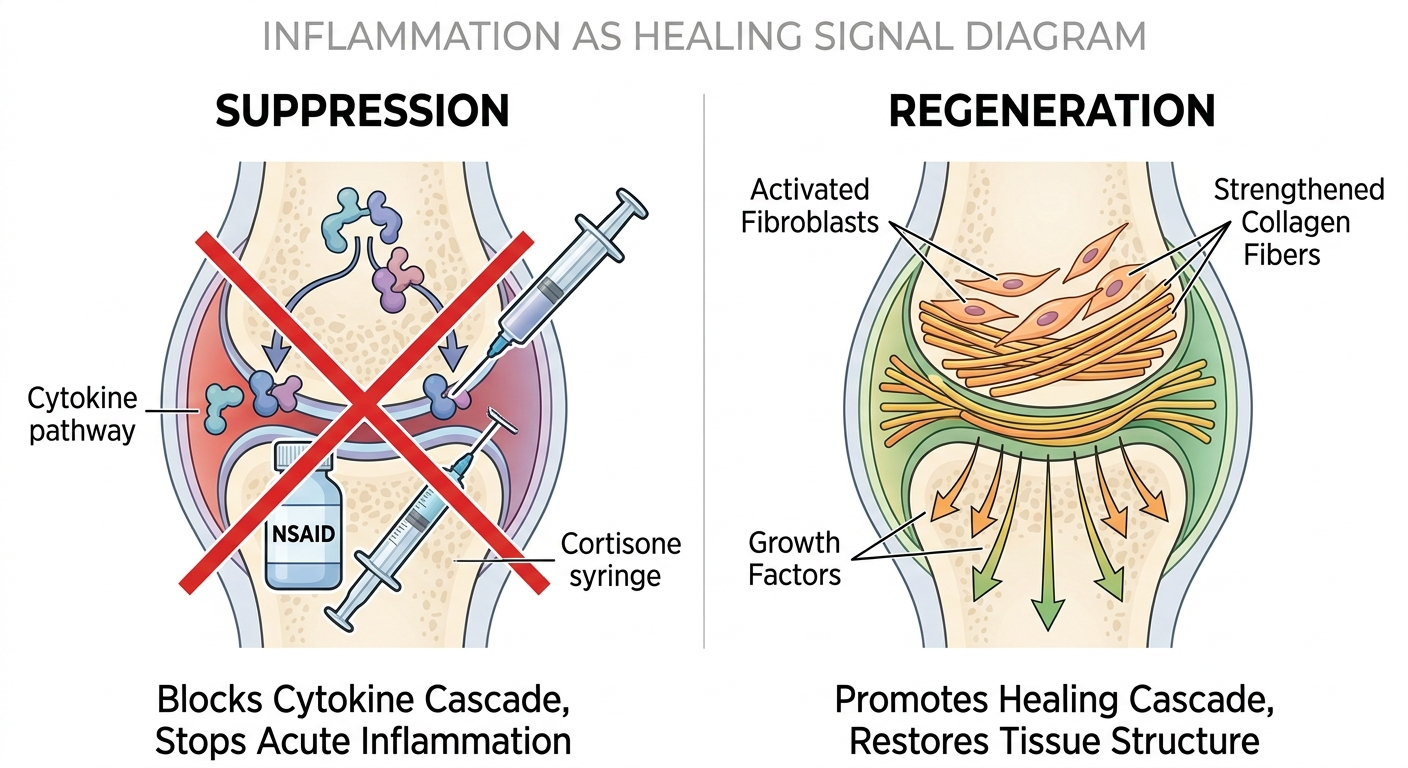
When ligaments stretch, cartilage thins, or a joint becomes mechanically unstable, your immune system dispatches cytokines to activate healing pathways. Fibroblasts arrive. Collagen production begins. Growth factors stimulate tissue remodeling. Blood flow increases. Mild swelling develops.
This is not dysfunction. This is your body attempting to fix something.
The problem begins when that signal is suppressed repeatedly while the underlying structural problem is never corrected. The joint continues moving abnormally. Microtrauma repeats. Inflammatory signals return. Suppression escalates. The cycle continues for months, then years, then decades.
Most patients arriving at Naturopathic Physicians Group in Scottsdale have been in this cycle for a long time. They have been told their pain is normal for their age. They have been prescribed anti-inflammatories and cortisone injections. The suppression works temporarily. Then the pain returns.
Dr. Katz and Dr. Ryder see this pattern constantly. Their position is direct: if the cause is not identified and corrected, suppression is not treatment. It is delay.
Why Conventional Care Often Falls Short for Chronic Pain
Before we talk about your pain, it helps to understand how the conventional care model approaches it.
Dr. Ryder opened the episode with a direct quote from the Medicare handbook: "Care that seeks to prevent disease, promote health, and prolong and enhance the quality of life is not considered medically necessary."
That language reflects how coverage rules are written. Medicare is structured to pay for the treatment of diagnosed conditions, not for preventive investigation. Understanding that distinction helps explain why so many patients feel like they are getting care that manages their condition rather than resolves it.
Dr. Katz cited the World Health Organization: 90% of all diseases today are not treatable through standard medical procedures. His interpretation is that conventional care is built around symptom management, and for many chronic conditions, that means patients cycle through treatments without ever addressing the underlying cause.
Dr. Katz put it plainly: "Your blood pressure being normal does not mean you treated the cause of why your blood pressure was high. You are not better. You are fake better."
The accumulation of prescriptions over time, the feeling that every appointment produces a new medication, but no clear direction — Dr. Katz and Dr. Ryder see this constantly. Their position is that chronic pain requires investigation, not just management.
Dr. Ryder noted that even getting a Vitamin D test covered requires coding it as a deficiency. You cannot diagnose a deficiency without running the test first. Patients caught in that loop often go without testing that could meaningfully change their care.
Dr. Katz described receiving a letter that week questioning lab orders he believed were clinically relevant to his patient. His frustration was clear: "How do you know what is necessary for my patient? They know nothing about my patient."
If you have felt dismissed or undertested by your conventional doctor, this context matters.
Why Imaging Often Misses the Real Problem
MRI and X-ray are useful but limited. They show structural degeneration. They reveal cartilage thinning and bone spurs. They do not measure dynamic instability.
Ligament laxity, subtle tendon microtears, and small joint misalignments often do not appear clearly on scans. A patient may be told they have arthritis when the primary driver of their symptoms is ligament weakness that allows excessive motion. Treating the scan is not the same as treating the patient.
At Naturopathic Physicians Group in Scottsdale, physical examination and structural assessment guide regenerative decisions. Stability testing and joint motion evaluation are central to finding the true source of inflammation.
Why Does Pain Return After NSAIDs or Cortisone?
Anti-inflammatories and cortisone reduce the inflammatory signal but do not repair the tissue generating it. If the underlying structural instability, dietary inflammation, or chemical stressors remain in place, the body continues producing that signal. When the medication wears off, symptoms return — often stronger over time as the structural problem progresses without being addressed.
What Inflammation Actually Is and Why Suppressing It Backfires
When you understand what inflammation is doing in your body, the standard treatment approach starts to look actively harmful.
Non-steroidal anti-inflammatory drugs reduce prostaglandin production. Corticosteroid injections suppress immune signaling. Both reduce inflammatory activity and often provide temporary pain relief.
But collagen fibers remain weak. Ligament laxity persists. The joint continues moving abnormally, triggering microtrauma, which triggers more inflammatory signals, which get suppressed again.
Dr. Katz's framing: "These treatments will quiet the symptoms temporarily. The structural problem continues." For many patients, this cycle goes on for a decade before they find their way to a practice willing to actually investigate the cause.
Even mild instability creates a cascade: increased shear forces, abnormal cartilage loading, repetitive microtrauma, and recurrent inflammatory signaling. Over time, repeated instability accelerates cartilage wear. What begins as ligament laxity may later appear as progressive arthritis. Inflammation is a reaction to mechanics.
How Do You Tell If Pain Is Structural or Inflammatory?
In practice, it is usually both, and that is exactly why isolated treatment often fails. Structural instability triggers inflammation. Dietary and chemical inflammation make structural symptoms feel worse. Dr. Katz and Dr. Ryder use physical examination, stability testing, hormone panels, and food sensitivity testing together to distinguish the primary drivers for each patient rather than treating a scan result in isolation.
How Naturopathic Medicine Treats the Actual Cause
When Dr. Katz and Dr. Ryder treat chronic pain, they are not working from one modality. They are addressing the full picture: structure, chemistry, diet, hormones, and stress. Every patient gets an individualized plan because the combination of contributors is different for every person.
Spinal Manipulation and Physical Medicine
Structural dysfunction needs structural treatment. Spinal manipulation and physical medicine directly address misalignments and mechanical instability that contribute to ongoing inflammatory signaling. This is one area where conventional medicine at least acknowledges the problem exists, though its treatment often moves too quickly toward steroids and surgery.
Regenerative Injection Therapy: Prolotherapy and PRP
These are not steroid injections. They are the opposite.
Prolotherapy introduces a controlled irritant solution to deliberately stimulate localized inflammation. The goal is to activate fibroblasts and promote collagen deposition in weakened ligament tissue. The body heals what the injection targets.
PRP therapy concentrates growth factors from your own blood. Platelet-derived growth factor and transforming growth factor beta support tissue remodeling and structural reinforcement at the cellular level.
Dr. Ryder made a point that lands differently than any clinical explanation: "We use these treatments ourselves. This is not something we are telling you to go get done. These are treatments we trust in ourselves and our families." Both doctors have had prolotherapy and PRP personally.
When ligaments strengthen, joint mechanics normalize. As mechanics normalize, inflammatory signaling decreases naturally. The pain does not return because the cause has been addressed.
Disclaimer: The discussion of these therapies is for educational purposes only. Please consult a medical professional who knows your personal history before starting any new therapies.
Acupuncture
Acupuncture is not simply a pain modality. Dr. Katz noted it has applications for food cravings, hormone regulation, cardiovascular support, and whole-body inflammation reduction. For patients dealing with chronic pain that has an emotional or hormonal component, acupuncture can be a meaningful addition to the treatment plan.
Food Sensitivity Testing
Running a food panel is one of the most direct investigations available for someone with chronic inflammation. The test identifies which foods your body is reacting to and which it tolerates well, allowing a genuinely personalized nutritional protocol rather than generic dietary advice.
Dr. Katz said it simply: food and drinks are the number one thing you put in your body every day. They are also the number one thing you can control. Finding out exactly which foods are causing damage is one of the most powerful steps a patient can take.
Targeted Supplements
When used alongside dietary change and structural treatment, specific supplements can meaningfully support healing:
Collagen: Dr. Ryder uses it several times daily. It directly supports connective tissue healing and is recommended alongside prolotherapy and PRP to accelerate recovery.
Biotin: A B vitamin that supports tendons, ligaments, and joints, as well as hair, skin, and nails. Dr. Katz notes that it helps both physical and emotional stress responses.
Curcumin / Turmeric: A natural anti-inflammatory that can be taken in capsule form or added to food. Dr. Ryder uses it regularly and notes the orange staining on kitchen towels is the only real downside.
Ginger: Anti-inflammatory with particular benefit for mobility in arthritis patients, while also supporting digestive health, acid reflux, and nausea. Dr. Katz appreciates supplements that work on multiple systems simultaneously.
Astaxanthin: Gaining recognition for its systemic anti-inflammatory properties along with benefits for eye and skin health. Dr. Ryder noted that a solid option is available at Costco.
Fish Oil (high-dose omega-3, wild-caught small fish): Anti-inflammatory support that works best when dietary omega-6 intake is also reduced, not as a compensating add-on.
Disclaimer: The discussion of these supplements is for educational purposes only. Please consult a medical professional who knows your personal history before starting any new therapies.
Are You Contributing to Your Own Inflammation?
This is the question Dr. Katz and Dr. Ryder ask directly. And the answer, for many patients, is at least partially yes. Not because they are careless people. But because the environment most people live in — processed food, chemical-laden personal care products, chronic stress — quietly drives inflammation while looking entirely normal.
Dr. Katz was blunt: "You could know exactly what food is causing your problem and still eat it anyway. Then, when you eat it, you feel like crap. And then you try it again three days later to see if it happens again." He laughed, saying it. Most people in the room had done exactly that.
The point is not guilt. The point is agency. Once you understand that your choices are contributing to your inflammation, you have the power to change them.
Can Food Really Trigger Inflammation-Related Pain?
Yes. Dr. Katz's position is that 80% of the body's systemic inflammation originates in the digestive tract. When the gut processes highly processed foods, artificial additives, or reactive proteins daily, it generates a low-grade inflammatory response that circulates systemically — including into joints, muscles, and connective tissue. For many patients, dietary change is one of the fastest levers available.
80% of Your Inflammation Starts in Your Gut
This is the number Dr. Katz comes back to repeatedly. Eighty percent of the body's inflammation originates in the digestive tract. Not in your joints. Not in your spine. In what you eat every single day.
This means that someone treating knee pain with cortisone injections, while eating a diet full of processed foods, sugar, and inflammatory proteins, is working against their own healing. The structural treatment cannot fully work while the dietary inflammation is constantly refueling the fire.
Dr. Katz referenced the MacMillan Dictionary definition of food: to sustain life, provide energy, and promote growth and repair of tissues. Processed food consistently falls short on that last criterion.
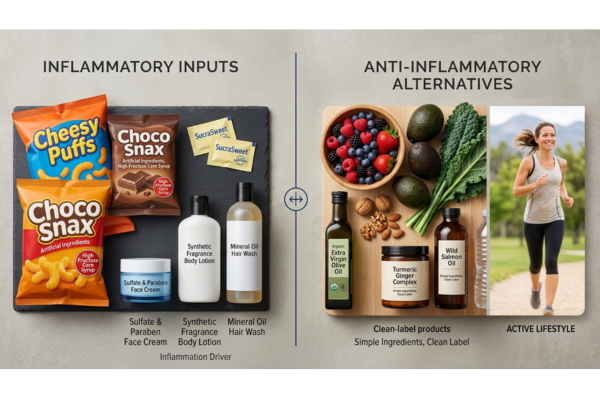
The Primary Dietary Inflammation Drivers
Sugar (processed and added sugar in all forms)
Artificial sweeteners, including aspartame, saccharin, and sucralose. Some studies have raised questions about associations with cancer and neurological effects, and evidence on their impact on insulin regulation is mixed. For people managing diabetes or metabolic conditions, the effects can vary — this is worth discussing with your clinician.
Dairy, which contains naturally occurring hormones regardless of labeling
Wheat and gluten for many patients
Non-organic or non-grass-fed meats, which carry added hormones and are pro-inflammatory
Farmed fish that accumulate toxic metals — always replace with wild-caught
Anything processed, including anything that came in a box, bag, or can
Chemical Stressors
Dr. Katz noted that the average person puts over 100 chemicals on their body before leaving the house. Shampoo. Deodorant. Makeup. Sunscreen. Each one contains compounds your liver must process. When that burden accumulates over the years, it contributes to systemic inflammation.
For anyone over 40, Dr. Ryder pointed out that legacy exposures — leaded fuel, lead pipes, mercury thermometers, metal dental fillings — left traces that are still circulating. Testing for heavy metals and addressing them through appropriate protocols can make a meaningful difference in pain levels.
Emotional Stressors
Cortisol directly affects cytokine balance. When chronically elevated, inflammatory markers stay elevated with it. The news you watch, the social media you scroll, the arguments you replay at 2 AM — these are controllable stressors with measurable impact on inflammatory load.
For stressors you cannot control, Dr. Katz's position is clear: ensure your hormones are balanced so your body can handle stress without it becoming chronic inflammation. "If your cortisol is good, you will be able to handle that stressor better and it will not create as much inflammation."
What Is the Fastest Way to Lower Inflammatory Load?
The most immediate lever is diet. Eliminating sugar, processed foods, and your personally reactive foods — identified through food sensitivity testing — typically produces the fastest reduction in systemic inflammatory markers. Reducing controllable emotional stressors, improving sleep, and beginning basic supplementation such as omega-3s and curcumin support the same outcome. Most patients notice a measurable difference within two to four weeks of consistent dietary change.
What Happens If You Keep Accepting It as Normal?
The pain does not stabilize on its own. Dietary inflammation keeps compounding. Ligament laxity progresses. As original medications stop working, new ones get added — while the underlying drivers remain unaddressed.
Dr. Ryder's point about the Medicare coverage language is relevant here: when the system prioritizes treatment of active conditions over prevention and investigation, patients with chronic pain can cycle through care for years without anyone asking what is causing it in the first place.
Dr. Katz: "Insurance pays for sick care. They pay for your drugs. They pay for surgery. When it comes to prevention, it is not medically necessary." For patients who want answers rather than ongoing management, that means looking beyond the conventional model.
Every day of unaddressed dietary inflammation is another day of tissue damage accumulating. What is mild to moderate degeneration today becomes a surgical discussion in two years if the underlying drivers are not addressed. Early evaluation preserves more options.
What Changes When You Treat the Cause?
When patients at Naturopathic Physicians Group in Scottsdale address their pain from every angle — diet, structural integrity, chemical load, emotional stress, and hormonal balance — the results are different in character from symptom suppression.
Pain does not just quiet down temporarily. It resolves because the conditions that were generating it have changed. Patients stop planning their day around flare-ups. They return to exercise. They sleep through the night. Their mood stabilizes as inflammation drops and hormones rebalance.
Dr. Ryder described it as patients moving from passive recipients of care to advocates in their own health. They understand their labs. They know which foods they react to. They recognize stress as a physiological event that needs managing, not just tolerating.
Dr. Katz's framing from the show applies here: "Your Health is Wealth. You could be a billionaire and have 10 diseases. You have money. But you cannot enjoy anything because you have no health."
Action Steps If Your Pain Keeps Returning
These are starting points for anyone serious about addressing chronic pain at the root rather than managing it indefinitely.
Eliminate the top inflammatory foods for two weeks. Cut sugar, artificial sweeteners, gluten, dairy, and processed foods. Track what changes. Reintroduce one category at a time.
Run a food panel. Do not guess what is inflaming your body. Find out. This test changes the dietary conversation from generic advice to personalized data.
Review every personal care product you use daily. Start replacing products with aluminum-based compounds, synthetic fragrances, and parabens.
Test heavy metals if you are over 40. Especially if you grew up before 1990. Leaded fuel, lead pipes, and mercury fillings leave measurable traces that can be addressed.
Identify your controllable emotional stressors and reduce them. News consumption and social media are choices. Treat them as such.
Ask about structural evaluation and regenerative options. If you have chronic joint, back, or soft tissue pain, ask whether ligament instability has been assessed and whether prolotherapy or PRP may be appropriate.
Support collagen production. This means adequate protein, vitamin C, and micronutrient intake alongside any regenerative treatment.
This information is educational and not a substitute for professional medical advice. Always consult your healthcare provider before making major health changes.
Take the Next Step
If you are done suppressing symptoms and ready to find out what is actually causing your pain, Naturopathic Physicians Group is here to help.
Dr. Steven Katz and Dr. Loreena Ryder provide comprehensive structural evaluations, hormone assessments, food sensitivity testing, and regenerative treatment options in Scottsdale, Arizona. They will not tell you what is wrong after a five-minute appointment. They will actually investigate.
Schedule your consultation at naturopathicgroup.com/contact
Phone: (480) 451-6161 Email: [email protected] Location: Naturopathic Physicians Group, Scottsdale, Arizona
Frequently Asked Questions
What causes chronic joint inflammation?
Chronic joint inflammation is driven by ligament instability, cartilage thinning, repetitive microtrauma, and mechanical imbalance. Diet is a major contributor. Dr. Katz notes that 80% of the body's inflammation originates in the digestive tract, meaning what you eat daily is often the primary driver of persistent joint pain.
Can diet really affect joint pain?
Yes. Sugar, artificial sweeteners, processed foods, dairy, and gluten are among the top dietary contributors to systemic inflammation. When inflammatory dietary load drops, patients often experience meaningful pain reduction even before structural treatments begin.
Can ligament instability improve without surgery?
In many cases, yes. Targeted regenerative stimulation through prolotherapy or PRP, combined with appropriate rehabilitation and dietary support, can meaningfully improve ligament strength. Results depend on severity, overall health, and how early the instability is addressed.
Does prolotherapy strengthen ligaments?
Prolotherapy stimulates collagen production by activating fibroblasts through controlled localized inflammation. This process supports improved ligament stability and structural reinforcement in selected patients.
How does PRP therapy work?
PRP therapy concentrates growth factors from your own blood and delivers them into damaged tissue. Platelet-derived growth factor and transforming growth factor beta support tissue remodeling and structural reinforcement.
Why do anti-inflammatories not solve chronic pain?
Anti-inflammatories reduce inflammatory signaling but do not reinforce collagen fibers or correct joint instability. If the dietary inflammation, structural instability, or chemical stressors driving the inflammation remain in place, symptoms return as soon as the medication wears off.
Is regenerative medicine safe?
Regenerative therapies are generally considered low risk when performed by trained professionals, but suitability varies by patient and condition. A comprehensive medical evaluation is required to determine whether these treatments are appropriate for your specific situation.
What are the most inflammatory foods?
Sugar, artificial sweeteners, processed foods, gluten, non-organic dairy, non-grass-fed meats, and farmed fish are the most commonly identified dietary inflammation drivers. Food sensitivity testing can identify which specific foods your body reacts to individually.
When should surgery be considered?
Surgery may be appropriate in cases of advanced degeneration with severe structural compromise. Regenerative stabilization through prolotherapy or PRP is typically explored first when degeneration is mild to moderate, and ligament instability has not been fully addressed.